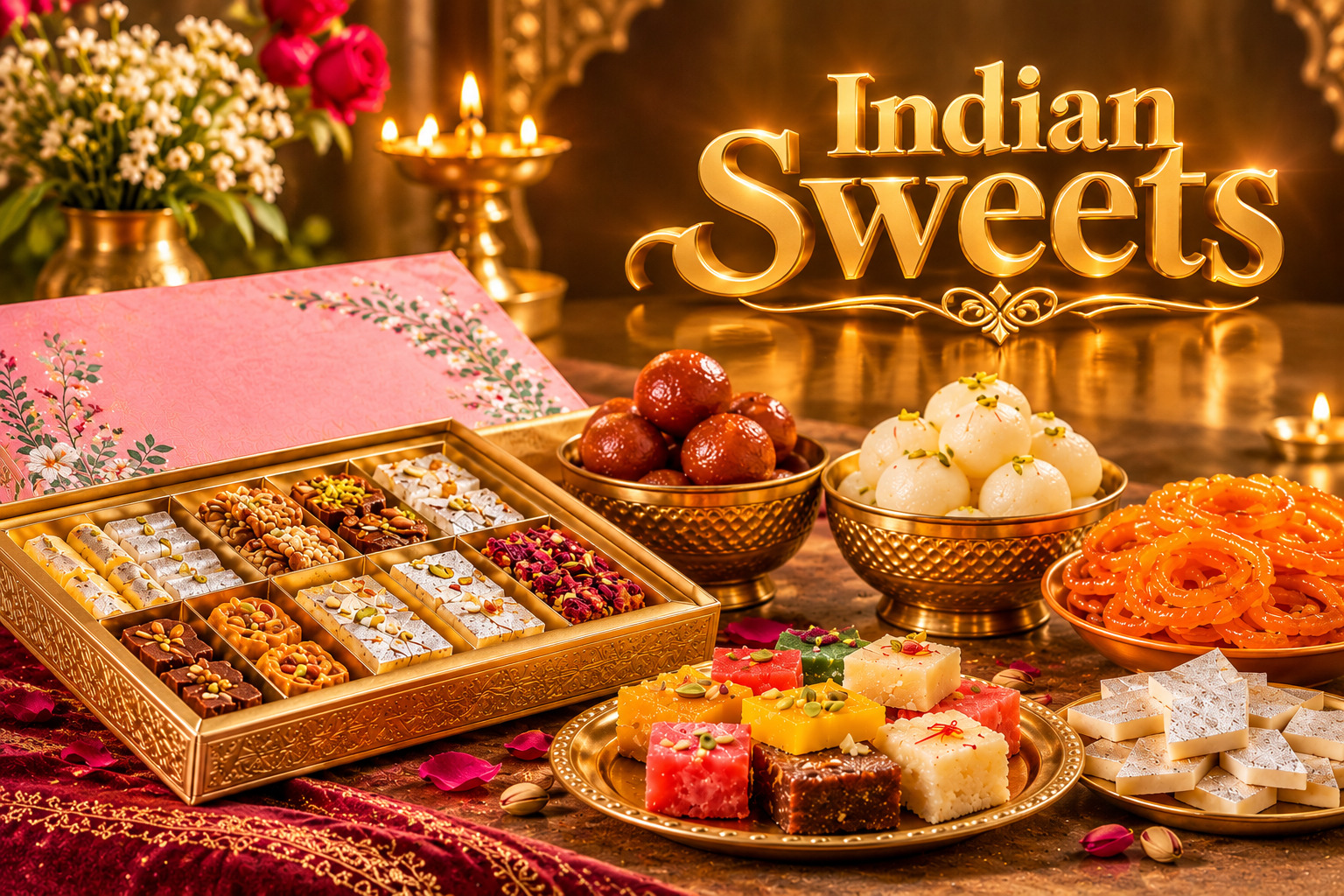
Food plays an important role in Indian traditions, and desserts hold a special place in almost every celebration. From festivals and weddings to birthdays and family gatherings, sharing something sweet is a familiar way of expressing happiness. Across different regions, Indian sweets reflect local ingredients, traditional recipes, cultural practices, and generations of culinary knowledge.
Whether it is a box of kaju katli during Diwali, soft gulab jamun after dinner, or fresh rasgulla at a family celebration, these desserts bring people together. Their variety of flavours, textures, and preparation methods makes them an important part of India's food culture.
1. The Cultural Importance of Traditional Indian Sweets
In India, sweets are closely connected with celebrations and traditional customs. Offering desserts to guests is considered a gesture of warmth and hospitality. Many families also include traditional mithai in religious ceremonies, festivals, weddings, and other auspicious occasions.
Sharing sweets often represents happiness, good wishes, and togetherness. During festivals such as Diwali, Holi, Raksha Bandhan, and Eid, different communities prepare or exchange special desserts as part of their celebrations.
Traditional recipes are also passed down through generations. Families often preserve their favourite preparations, making certain flavours closely associated with childhood memories and special occasions.
2. Popular Varieties of Indian Sweets You Should Know
One of the most interesting aspects of Indian desserts is their variety. Different regions use ingredients such as milk, flour, sugar, nuts, lentils, and khoya to create distinctive preparations.
Gulab Jamun
Gulab jamun is a popular dessert made using milk solids or khoya, shaped into small balls, fried, and soaked in sugar syrup. Its soft texture and sweet flavour make it a favourite at weddings, festivals, and family gatherings.
Kaju Katli
Kaju katli is prepared using cashews and sugar to create a smooth, diamond-shaped sweet. Its rich taste and delicate texture make it a popular choice for gifting during festivals and special occasions.
Rasgulla
Rasgulla is a traditional Bengali dessert made from chenna, which is cooked into soft balls and soaked in light sugar syrup. Its spongy texture and syrupy sweetness make it widely enjoyed.
Soan Papdi
Soan papdi is known for its flaky, layered texture and light consistency. Prepared using ingredients such as gram flour, sugar, and ghee, it is commonly included in festive sweet boxes.
Motichoor Laddu
Motichoor laddu is made from tiny fried gram flour droplets combined with sugar syrup and shaped into round sweets. It is frequently served during religious ceremonies, weddings, and festive celebrations.
3. How Regional Traditions Influence Sweet Recipes
India's regional diversity is reflected in its desserts. Every part of the country has distinctive preparations influenced by local ingredients, climate, and culinary traditions.
Northern India is known for preparations such as peda, pinni, balushahi, and different varieties of laddus. Western India offers specialities such as shrikhand, ghevar, and modak. Eastern India is particularly recognised for rasgulla, sandesh, and cham cham.
Southern India also has a rich dessert tradition, with Mysore pak, payasam, adhirasam, and other regional preparations enjoyed during festivals and family occasions.
This regional diversity makes exploring traditional Indian sweets an interesting culinary experience. Each preparation offers a different combination of ingredients, textures, and flavours.
4. The Importance of Ingredients in Sweet Preparation
The taste and texture of a dessert depend greatly on the ingredients used and the preparation method. Milk, khoya, chenna, gram flour, sugar, ghee, nuts, and cardamom are commonly used in many traditional recipes.
For example, khoya provides richness to several milk-based preparations, while gram flour is used in sweets such as besan laddu and motichoor laddu. Cashews and almonds contribute flavour and texture, while cardamom adds a distinctive aroma.
The balance of ingredients, cooking temperature, and preparation time also influence the final result. Traditional recipes often require careful preparation to achieve their characteristic consistency and taste.
5. Choosing the Right Sweets for Different Occasions
Different celebrations call for different dessert choices. Selecting suitable mithai can make gatherings and gifting more enjoyable.
Festivals: Kaju katli, soan papdi, laddus, and assorted sweet boxes are popular festive choices.
Weddings: Gulab jamun, rasmalai, peda, and assorted mithai are commonly served.
Family Gatherings: A combination of traditional milk-based sweets and dry fruit desserts offers variety.
Religious Occasions: Peda, laddus, and other traditional preparations are frequently included in offerings.
Corporate Gifting: Assorted sweet boxes provide a convenient option for festive greetings and celebrations.
When selecting desserts, consider the occasion, guest preferences, portion sizes, and storage requirements.
6. How to Store Traditional Sweets Properly
Proper storage helps maintain the taste, texture, and quality of desserts. Different varieties require different storage conditions depending on their ingredients and moisture content.
Milk-based sweets generally require refrigeration and should be consumed within the period mentioned on their packaging. Dry sweets, such as certain nut-based preparations, should be stored in airtight containers in a cool, dry place.
Always check the product label for storage instructions and consume sweets within the recommended period. Avoid leaving perishable desserts at room temperature for extended periods.
Conclusion
From traditional family recipes to regional specialities, Indian sweets represent much more than desserts. They bring together cultural traditions, festive celebrations, local ingredients, and shared memories. Their diverse flavours and preparation styles make them suitable for everything from everyday treats to grand celebrations.
Whether you enjoy the richness of gulab jamun, the delicate texture of kaju katli, or the traditional taste of soan papdi, exploring different varieties offers a wonderful way to appreciate India's culinary heritage. These timeless desserts continue to make celebrations sweeter and bring people closer through the simple joy of sharing food.
Frequently Asked Questions (FAQs)
1. What are the most popular Indian sweets?
Some popular varieties include gulab jamun, kaju katli, rasgulla, motichoor laddu, soan papdi, peda, and rasmalai.
2. Which Indian sweets are commonly gifted during festivals?
Kaju katli, soan papdi, assorted laddus, dry fruit sweets, and mixed mithai boxes are popular choices for festive gifting.
3. What are traditional Indian sweets made from?
Common ingredients include milk, khoya, chenna, gram flour, sugar, ghee, nuts, and aromatic spices such as cardamom.
4. Which Indian sweets are popular in different regions?
Rasgulla and sandesh are popular in eastern India, ghevar is associated with Rajasthan, Mysore pak is a speciality of Karnataka, and peda is enjoyed across several regions.
5. How should traditional mithai be stored?
Milk-based desserts should generally be refrigerated, while suitable dry sweets can be stored in airtight containers. Always follow the storage instructions provided with the product.
6. Why are sweets important in Indian festivals?
Sweets symbolise happiness, hospitality, and togetherness. Sharing them is a longstanding tradition during festivals, religious ceremonies, weddings, and family celebrations.
This article is general information and is not a substitute for advice from a qualified health professional.