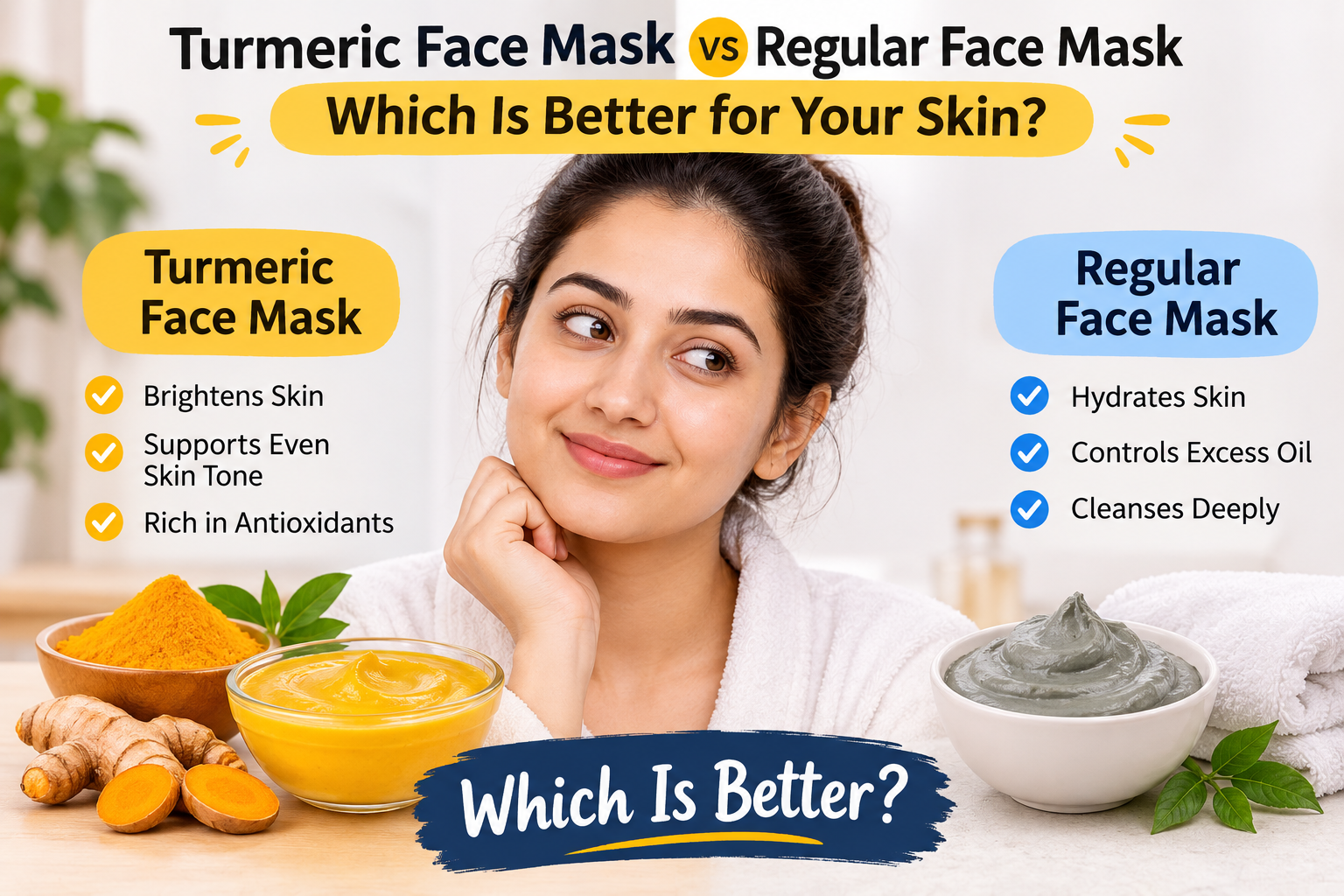
Choosing the right face mask can make a difference in how your skin looks and feels. With so many skincare products available, it can be difficult to decide between a turmeric face mask and a regular face mask. Both options can support a skincare routine, but they may differ in their ingredients, intended benefits, formulation, and suitability for different skin types.
A turmeric face mask is particularly popular among people looking for skincare products containing turmeric, an ingredient traditionally used in beauty routines. Regular face masks, on the other hand, come in several formulations, including clay, charcoal, gel, cream, and sheet masks. Each type is designed to address different skincare needs, such as hydration, excess oil, cleansing, or improving the appearance of dull skin.
So, which one should you choose? The answer depends on your skin type, concerns, ingredient preferences, and the results you expect from your skincare routine.
This guide compares turmeric face masks with regular face masks, explains their potential benefits, highlights important buying factors, and helps you select a suitable option for your skin.
What Is a Turmeric Face Mask?
A turmeric face mask is a skincare product formulated with turmeric as one of its key ingredients. Turmeric contains curcumin, a naturally occurring compound known for its antioxidant and anti-inflammatory properties.
In skincare formulations, turmeric is commonly included in products designed to support a healthy-looking complexion and improve the appearance of dull or uneven-looking skin.
Unlike traditional homemade turmeric mixtures, commercially available turmeric face masks are formulated for convenient application. Depending on the product, they may contain additional ingredients such as botanical extracts, moisturising agents, clays, or other skin-conditioning components.
Potential Benefits of a Turmeric Face Mask
A well-formulated turmeric face mask may offer several skincare benefits:
Supports a brighter-looking complexion: Turmeric-based skincare products are commonly used in routines targeting dull-looking skin.
Provides antioxidant support: Curcumin has antioxidant properties that may help protect against oxidative stress.
Supports the appearance of even skin tone: Regular skincare practices may help improve the overall appearance of uneven-looking skin.
Complements cleansing routines: Depending on its formulation, a turmeric mask may help remove surface impurities.
Supports a refreshed appearance: Using a suitable face mask can make the skin feel refreshed and conditioned.
It is important to remember that a turmeric face mask is not a medical treatment for acne, pigmentation, or other skin conditions. Results depend on the complete formulation and individual skin characteristics.
What Is a Regular Face Mask?
A regular face mask is a broad category of skincare products designed to address different skin concerns. Unlike turmeric face masks, which highlight a particular ingredient, regular face masks can contain a wide range of active and conditioning ingredients.
Different formulations serve different purposes.
Common Types of Regular Face Masks
1. Clay Face Masks
Clay masks are commonly used by people with oily or combination skin. Ingredients such as kaolin and bentonite can absorb excess surface oil and help remove impurities.
They may be useful when your skin feels greasy, particularly around the forehead, nose, and chin.
2. Charcoal Face Masks
Charcoal masks are generally marketed for cleansing and removing surface impurities. They are often selected by people who prefer products designed for oily or congested-looking skin.
However, not every charcoal mask is suitable for sensitive or dry skin.
3. Hydrating Face Masks
Hydrating masks typically contain ingredients such as hyaluronic acid, glycerin, aloe vera, or other moisturising agents.
They are suitable for people whose skin feels dry, tight, or dehydrated.
4. Gel Face Masks
Gel masks usually have lightweight textures and are often designed to provide a refreshing and hydrating skincare experience.
They can be a convenient option for people who dislike heavy cream-based formulations.
5. Sheet Face Masks
Sheet masks are fabric or biodegradable sheets soaked in a skincare essence. They are designed for convenient application and commonly focus on hydration and temporary skin conditioning.
The effectiveness of a sheet mask depends on its ingredients and formulation rather than the sheet itself.
Turmeric Face Mask vs. Regular Face Mask: Key Differences
The main difference is that a turmeric face mask is identified by its featured ingredient, while a regular face mask can be made with many different ingredients.
Here are the major factors to consider.
1. Ingredients and Formulation
A turmeric face mask features turmeric in its formulation. Some products may also include aloe vera, botanical extracts, moisturising ingredients, or other skincare components.
Regular face masks have a wider variety of formulations. A clay mask may focus on oil absorption, while a hydrating mask may contain ingredients that help maintain skin moisture.
Your decision should depend on the complete ingredient list rather than the product name alone.
For example:
Choose a turmeric-based formula if you prefer skincare products featuring turmeric.
Consider a clay mask if excess oil is your main concern.
Look for a hydrating mask if your skin frequently feels dry.
Consider a gentle gel mask if you prefer lightweight skincare products.
2. Benefits for Different Skin Concerns
Turmeric face masks are often chosen for routines focused on dullness and the appearance of uneven skin tone.
Regular face masks can target a broader range of concerns depending on their ingredients.
For example, a moisturising mask may be more suitable for dehydrated skin than a clay-based turmeric mask. Similarly, a gentle clay formulation may be more useful for managing surface oil than a rich hydrating mask.
The best choice is the product that addresses your primary skincare concern without causing irritation or excessive dryness.
3. Suitability for Different Skin Types
Skin type is an important consideration when selecting any face mask.
For oily skin: A lightweight turmeric face mask or a suitable clay-based mask may be worth considering. Check whether the formula is non-comedogenic if you are concerned about clogged pores.
For dry skin: Look for turmeric masks containing moisturising ingredients such as glycerin or aloe vera. Avoid formulations that leave your skin feeling tight.
For combination skin: You may benefit from using different masks on different areas of your face. For example, a clay mask can be used on oily areas while a hydrating mask can be applied to drier areas, provided both products are suitable for your skin.
For sensitive skin: Choose fragrance-free, gentle formulations where possible. Turmeric itself and other botanical ingredients can cause irritation or allergic reactions in some individuals.
For normal skin: You have more flexibility, but it is still important to select a mask based on your specific skincare goals.
4. Application and Convenience
Most wash-off turmeric face masks and regular cream or clay masks follow a similar application process.
However, their textures and recommended usage times can differ.
A typical wash-off mask routine involves:
Clean your face with a gentle cleanser.
Apply an even layer of the mask according to the product instructions.
Avoid the eyes, lips, and irritated areas.
Leave it on for the recommended duration.
Rinse thoroughly with lukewarm water.
Follow with a suitable moisturiser.
Sheet masks and overnight masks may have different instructions, so always follow the manufacturer's directions.
5. Skin Feel After Application
The experience after using a face mask depends largely on its formulation.
A turmeric face mask may leave the skin feeling refreshed or conditioned, depending on its additional ingredients.
Clay masks may leave oily skin feeling less greasy, although some formulations can cause dryness.
Hydrating masks may make the skin feel softer and more comfortable.
If your skin feels burning, excessively tight, itchy, or uncomfortable after application, rinse the product off and discontinue use.
Is a Turmeric Face Mask Better Than a Regular Face Mask?
A turmeric face mask is not automatically better than every regular face mask. Both have different purposes, and the right option depends on your skincare requirements.
Consider a turmeric face mask if:
You prefer skincare products containing turmeric.
Your routine focuses on improving the appearance of dull skin.
You want to try a botanical ingredient-based skincare product.
You prefer a wash-off mask with a balanced formulation.
Consider another type of regular face mask if:
Your main concern is persistent dryness.
You want a clay-based product for excess surface oil.
You prefer a lightweight hydrating gel.
You need a specific formulation for your skin type.
For example, someone with dry skin may benefit more from a hydrating face mask containing glycerin than from a strongly oil-absorbing turmeric and clay mask.
Similarly, someone with oily skin may prefer a suitable clay-based turmeric formula over a heavy cream mask.
The important point is to select a product based on its ingredients and intended use, not simply its marketing claims.
What to Look for When Buying a Turmeric Face Mask
If you are planning to purchase a turmeric face mask, checking the product details can help you make a more informed decision.
1. Check the Ingredient List
Do not judge a skincare product only by the presence of turmeric on its packaging.
Look at the complete ingredient list and check for ingredients that complement your skin type.
Some commonly used skincare ingredients include:
Aloe vera: Used in skincare formulations for its moisturising and soothing properties.
Glycerin: A humectant that helps attract and retain moisture.
Kaolin clay: Used to absorb excess surface oil.
Hyaluronic acid: Helps maintain skin hydration.
Botanical extracts: Included in various formulations for their skin-conditioning properties.
Choose a formulation that suits your skin rather than one with the longest ingredient list.
2. Consider Your Skin Type
Before buying, identify whether your skin is oily, dry, combination, or sensitive.
A product that works comfortably for someone with oily skin may not be suitable for someone with dry or sensitive skin.
If you are unsure about your skin type, observe how your skin feels after cleansing and throughout the day.
3. Look for Clear Usage Instructions
A trustworthy skincare product should clearly explain:
How much product to apply.
How long to leave it on.
How frequently to use it.
Whether it needs to be washed off.
Any precautions or ingredients that require attention.
Avoid products that promise instant or permanent changes in skin tone.
4. Check Product Quality and Packaging
Before purchasing a turmeric face mask, check the following:
Complete ingredient declaration.
Manufacturer and customer support information.
Batch number and expiry date.
Properly sealed packaging.
Storage instructions.
Relevant product certifications and regulatory details.
Good packaging also helps protect the product from contamination and unsuitable storage conditions.
5. Compare Price and Product Quantity
Price is another important consideration, especially if you plan to include the face mask in your regular skincare routine.
A cheaper product is not always the most economical choice. Compare the quantity, formulation, packaging, and recommended application frequency.
For example, a product with a slightly higher price may offer better value if it contains a suitable formulation and requires less product per application.
Avoid purchasing a face mask simply because it has a large discount. Product suitability and ingredient quality should remain your priorities.
How to Use a Turmeric Face Mask Correctly
Using a face mask properly is just as important as choosing the right product.
Follow these practical steps:
Step 1: Clean Your Face
Wash your face with a gentle cleanser to remove surface dirt, oil, and sunscreen residue.
Pat your skin dry with a clean towel.
Step 2: Perform a Patch Test
Before using a new turmeric face mask, apply a small amount to an inconspicuous area, following the product's instructions.
Observe the area for irritation over the next 24–48 hours. A patch test reduces risk but cannot guarantee that a reaction will not occur.
Step 3: Apply an Even Layer
Spread the mask gently over your face, avoiding the eye and lip areas.
Do not apply excessive pressure or rub the product into your skin.
Step 4: Follow the Recommended Duration
Leave the mask on only for the duration specified on the packaging.
Keeping a mask on longer does not necessarily improve its benefits and may increase the risk of irritation.
Step 5: Rinse and Moisturise
Wash the mask off thoroughly with lukewarm water.
Apply a moisturiser suitable for your skin type to help maintain skin hydration.
During the day, continue using broad-spectrum sunscreen with SPF 30 or higher.
Common Mistakes to Avoid When Choosing a Face Mask
Even a good skincare product may not deliver a comfortable experience if it is used incorrectly.
Here are some mistakes to avoid:
1. Choosing a Product Only Because It Contains Turmeric
Turmeric is an interesting skincare ingredient, but the overall formulation matters more than one ingredient.
2. Ignoring Your Skin Type
A mask designed for oily skin may be too drying for someone with dry skin. Always consider your individual requirements.
3. Using Face Masks Too Frequently
Daily use is not necessary for most wash-off masks. Follow the recommended frequency and reduce usage if your skin becomes dry or irritated.
4. Expecting Instant Results for Dark Spots
A face mask cannot guarantee the removal of pigmentation, acne marks, or dark spots. These concerns may require a consistent skincare routine and, in some cases, advice from a dermatologist.
5. Skipping Moisturiser
Some face masks can leave the skin feeling dry. Following up with an appropriate moisturiser helps maintain skin comfort.
6. Ignoring Irritation
If you experience itching, redness, burning, or swelling, rinse off the product and stop using it. Seek medical advice if symptoms are severe or persistent.
Why Consider a Turmeric Face Mask from Reshma Beauty?
When selecting a turmeric face mask, it is worth considering brands that make product information and ingredient details easy to understand.
Reshma Beauty offers a range of beauty and personal care products for people interested in adding different skincare essentials to their routines.
If you are considering a turmeric-based face mask, review the product's ingredient list, intended benefits, application instructions, and suitability for your skin type before purchasing.
A good skincare purchase should be based on your actual needs rather than promotional promises. Take time to compare formulations and choose a product that fits comfortably into your existing routine.
Frequently Asked Questions About Turmeric Face Masks
1. Is a turmeric face mask better than a regular face mask?
Not necessarily. A turmeric face mask is a specific type of face mask featuring turmeric, while regular face masks include clay, charcoal, gel, cream, and hydrating formulations. The better option depends on your skin type, concerns, and the product's complete ingredients.
2. Can I use a turmeric face mask every day?
Daily use is not recommended unless the product specifically instructs you to do so. Most wash-off masks are intended for occasional use. Follow the manufacturer's directions and adjust usage according to your skin's response.
3. Is a turmeric face mask suitable for oily skin?
It can be suitable for oily skin if the overall formulation is lightweight and appropriate for your needs. Products containing suitable clay ingredients may also help absorb excess surface oil.
4. Can a turmeric face mask help with dark spots?
Turmeric contains curcumin, which has been studied for its antioxidant and anti-inflammatory properties. However, there is limited clinical evidence that ordinary turmeric face masks can reliably fade dark spots. Persistent pigmentation may require dermatologist-recommended treatments.
5. Does a turmeric face mask suit sensitive skin?
Some people with sensitive skin may tolerate a properly formulated turmeric mask, while others may experience irritation. Choose a gentle product, check its ingredients, and perform a patch test before applying it to your face.
6. How long should I leave a turmeric face mask on?
Follow the duration mentioned on the product packaging. Different formulations have different instructions, so there is no universal application time for every turmeric face mask.
7. Should I apply moisturiser after using a turmeric face mask?
Yes. Applying a suitable moisturiser after rinsing off a wash-off face mask can help maintain skin hydration and comfort.
8. Can I use a turmeric face mask with other skincare products?
Generally, a suitable turmeric face mask can be included in a regular skincare routine. However, avoid combining multiple potentially irritating products in the same routine, especially strong exfoliating acids or retinoids, if your skin is sensitive. Introduce new products gradually.
Conclusion
Choosing between a turmeric face mask and a regular face mask comes down to your skin type, preferred ingredients, and skincare goals. Turmeric-based formulations may be a suitable option for people who prefer botanical skincare and want to improve the appearance of dull-looking skin. Meanwhile, regular face masks offer more specialised choices for hydration, oil control, and cleansing.
Before purchasing, check the ingredient list, compare product formulations, understand the application instructions, and consider your skin's individual needs. Avoid products that make unrealistic promises about instant brightening or permanent pigmentation removal.
If you are exploring turmeric-based skincare, consider the options available from Reshma Beauty. Choose a formulation that suits your skin, use it as directed, and make it part of a balanced skincare routine.
This article is general information and is not a substitute for advice from a qualified health professional.