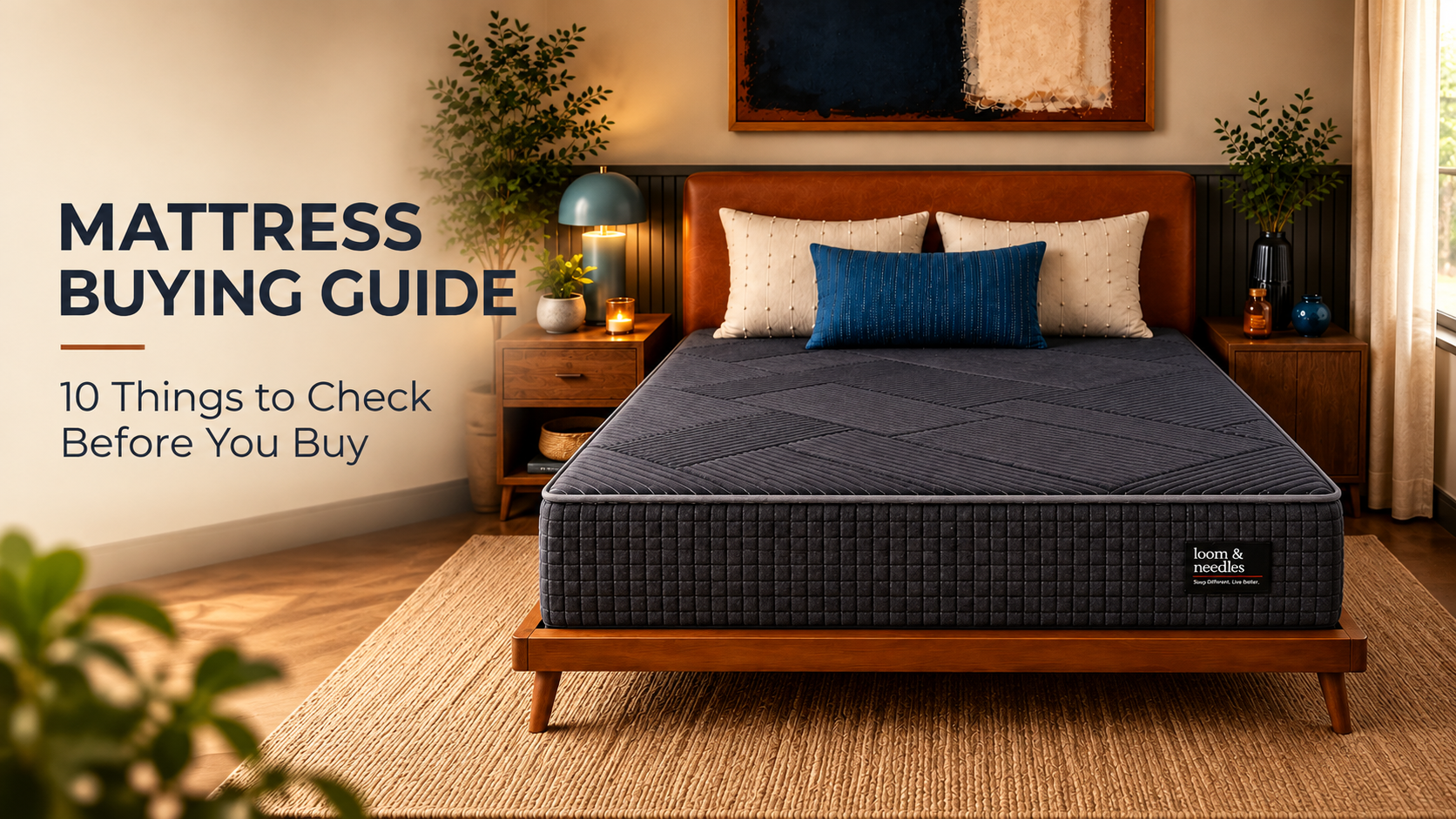
Buying a mattress is an important decision because it affects your comfort, sleeping habits, and everyday routine. With so many options available, choosing the right mattress can feel confusing. Different materials, firmness levels, mattress sizes, thicknesses, and price ranges make it difficult to decide which product offers the best value for your needs.
A mattress that feels comfortable in a showroom or looks appealing online may not necessarily be the right choice for your bedroom. Your sleeping position, body weight, room temperature, bed frame, and personal comfort preferences all influence how a mattress feels over time.
Whether you are buying a mattress for your master bedroom, a guest room, or a new home, understanding the essential features can help you make a more informed purchase. This mattress buying guide explains ten important factors to consider before spending your money, along with practical tips to help you compare different options.
1. Choose the Right Mattress Size for Your Bed
Mattress size should be one of the first things you check before making a purchase. A mattress that is too small can leave uncomfortable gaps, while one that is too large may not fit your existing bed frame.
Start by measuring the internal length and width of your bed frame rather than relying only on the size mentioned in the product description. Mattress dimensions can vary slightly between manufacturers, so always check the exact measurements.
Consider these common mattress sizes:
Single mattress: Suitable for children, teenagers, and adults sleeping alone in compact bedrooms.
Double mattress: A practical option for individuals who prefer additional sleeping space or couples with limited bedroom space.
Queen-size mattress: Suitable for couples who want a balance between sleeping space and efficient room usage.
King-size mattress: Ideal for couples who prefer more personal space or families who occasionally share the bed with children.
Before choosing a larger mattress, make sure your bedroom has enough space to accommodate the bed and allow easy movement around it.
If you are replacing an old mattress, measure it carefully and compare those measurements with the new product's specifications. This simple step can prevent fitting problems and unnecessary returns.
2. Understand the Different Types of Mattresses
Mattress materials affect comfort, responsiveness, pressure distribution, airflow, and long-term performance. Understanding the differences helps you select a mattress that suits your sleeping preferences.
Memory Foam Mattress
Memory foam responds to body heat and pressure, gradually adapting to the body's shape. It can help distribute pressure across contact points such as the shoulders and hips.
This type of mattress may suit people who prefer a cushioning sensation and want to reduce the transfer of movement when sharing a bed.
However, some memory foam mattresses retain more heat than others. If you tend to sleep warm, look for information about the foam construction, ventilation, and cooling features rather than relying only on marketing terms.
Latex Mattress
Latex mattresses generally offer a responsive feel, allowing the sleeper to move more easily across the surface. Depending on the construction, they may also provide good durability and airflow.
They can be a suitable choice for people who prefer a more buoyant sleeping surface rather than the deeper contouring associated with some memory foam mattresses.
Check whether the product uses natural latex, synthetic latex, or a blend, as these materials differ in composition and price.
Spring Mattress
Spring mattresses use metal coils to provide support. Their feel depends on the spring design, padding, and overall construction.
They may offer a more traditional mattress feel, and some designs provide good airflow through the coil system. However, motion transfer and pressure relief vary considerably between models.
Hybrid Mattress
A hybrid mattress combines a spring support system with foam or other comfort layers. It may offer a balance of responsiveness, cushioning, and support.
When comparing hybrid mattresses, check the type of springs, comfort-layer materials, edge support, and total construction. The word "hybrid" alone does not guarantee better comfort.
The best mattress material depends on your preferences, not simply on which category is most expensive.
3. Select the Right Firmness Level
Firmness describes how soft or firm a mattress feels when you lie on it. It is different from support, which refers to how well the mattress helps maintain a comfortable sleeping position.
A mattress can feel soft while still providing adequate support, provided its construction suits your body and sleeping needs.
Soft Mattress
A softer mattress may appeal to side sleepers who prefer cushioning around the shoulders and hips. However, if it allows the body to sink excessively, it may feel uncomfortable or make movement more difficult.
Medium-Firm Mattress
Many people consider medium-firm mattresses because they offer a balance between cushioning and a more stable surface. Nevertheless, comfort varies with body weight, sleeping position, and mattress design.
Firm Mattress
A firm mattress may suit people who prefer less sinking and a more stable sleeping surface. However, a mattress that is too firm for your body can create uncomfortable pressure around the shoulders and hips.
Before choosing a firmness level, consider your usual sleeping position, comfort preferences, and any areas where you tend to feel pressure.
If possible, test the mattress in your usual sleeping position. When buying online, review the comfort description, trial period, return conditions, and warranty carefully.
4. Consider Your Sleeping Position
Your sleeping position affects how your body interacts with the mattress. Choosing a mattress that accommodates your usual position can improve comfort and help you avoid unnecessary pressure.
Side sleepers: Look for enough cushioning around the shoulders and hips. A mattress that is excessively firm may feel uncomfortable at these contact points.
Back sleepers: Consider a mattress that balances cushioning with support across the back and hips. The surface should feel comfortable without excessive sinking.
Stomach sleepers: Some stomach sleepers prefer a firmer, more stable surface to limit excessive sinking around the midsection.
Combination sleepers: If you change positions frequently, consider a mattress that makes turning and repositioning comfortable. Responsive foam or a suitable hybrid design may be worth comparing.
For example, someone who sleeps primarily on their side may prefer a different firmness level from someone who sleeps on their stomach. Buying the same mattress simply because it suits a family member may not deliver the same experience.
If two people share a bed but have different preferences, consider a mattress that balances their needs or explore models with different firmness options on each side.
5. Check Mattress Thickness and Construction
Mattress thickness influences bed height, the overall feel, and how much room is available for comfort and support layers. However, a thicker mattress is not automatically better.
Mattresses are available in various thicknesses, and the appropriate choice depends on the materials, construction, sleeper's needs, and bed frame.
Before buying, check the following:
Comfort layers: These determine the initial feel of the mattress and influence cushioning.
Support core: This provides the underlying structure and affects how the mattress responds to body weight.
Overall thickness: Make sure the mattress works with your bed frame and preferred bed height.
Edge construction: Stronger edges may make sitting on the side of the bed or getting in and out easier.
Weight capacity: Follow the manufacturer's stated limits, especially if the mattress will be shared by two adults.
Also consider the height of your existing bed frame. A thick mattress on a tall base may make getting into bed difficult, while a low-profile mattress may not provide your preferred overall height.
Rather than paying extra for thickness alone, focus on the quality and suitability of the internal construction.
6. Evaluate Comfort, Support, and Pressure Relief
Comfort is personal, but certain features can help you evaluate whether a mattress is suitable for everyday use.
Support refers to how the mattress responds to your body and helps you maintain a comfortable sleeping position. Pressure relief refers to how effectively the surface distributes pressure around areas that contact the mattress.
These features are particularly relevant if you sleep on your side, change positions frequently, or share a bed.
When testing a mattress, ask yourself:
Does the surface feel comfortable around your shoulders, hips, and back?
Can you change sleeping positions without struggling against the mattress?
Does your body feel excessively sunk into the surface?
Can you get in and out of bed comfortably?
Does the mattress feel stable when you move?
For couples, movement transfer is another important consideration. If one person moves frequently during the night, a mattress that absorbs movement may reduce the disturbance felt by the other person.
Remember that no mattress can guarantee pain relief or treat a medical condition. If you experience persistent back pain or other symptoms, seek advice from a qualified healthcare professional rather than relying on a mattress change alone.
7. Check Breathability and Temperature Regulation
Your bedroom environment can influence how comfortable a mattress feels. If you tend to sleep warm, breathability and heat management deserve particular attention.
Some foam mattresses can retain heat, depending on their density, construction, and surrounding bedding. Spring systems and certain ventilated designs may allow more airflow, although performance varies between products.
Before purchasing a mattress, check whether the manufacturer provides details about:
Ventilated foam or airflow channels.
Breathable covers and fabric construction.
Cooling materials incorporated into the comfort layers.
The design of the spring or support system.
Care instructions for maintaining the mattress cover.
Do not assume that a product labelled "cooling" will automatically keep you cool throughout the night. Look for clear details about the materials and construction.
Your bedsheets, mattress protector, blanket, room ventilation, and air conditioning can also influence sleeping temperature.
For homes in warmer parts of India, a mattress with suitable ventilation and a breathable cover may be worth prioritising, particularly if you regularly experience discomfort from heat.
8. Compare Mattress Prices and Overall Value
Mattress prices vary according to size, material, thickness, construction, brand, and additional features. The most expensive mattress is not necessarily the best choice for every sleeper, and the cheapest option may not provide the features you need.
Instead of comparing products by price alone, evaluate what you receive for the amount you pay.
What Influences Mattress Prices?
Material quality: Different foams, latex formulations, and spring systems have different manufacturing costs and performance characteristics.
Mattress size: Larger mattresses generally require more materials and may cost more than smaller sizes within the same range.
Construction: Layer composition, spring design, edge reinforcement, and specialised covers can influence the price.
Additional features: Removable covers, specialised comfort layers, and other design elements may add to the cost.
Warranty and service: Review the terms of the warranty, the availability of customer support, and any conditions that apply to claims.
How to Find Better Value
Start by setting a realistic budget and identifying your essential requirements. For example, if you need a queen-size mattress for two adults, prioritise suitable dimensions, comfortable firmness, adequate support, and movement control before considering optional upgrades.
When comparing two mattresses at different prices, ask whether the more expensive model offers a feature that matters to you.
A useful checklist includes:
Does it fit your bed frame?
Are the materials and dimensions clearly specified?
Does the firmness suit your preferences?
Are delivery charges included?
What are the return and exchange conditions?
What does the warranty cover, and for how long?
Is there a trial period, and what conditions apply?
A mattress that meets your needs and falls within your budget can be a better purchase than a more expensive model with features you are unlikely to use.
9. Review the Warranty, Trial Period, and Return Policy
When buying a mattress online, the product description is only one part of the purchase decision. The policies governing delivery, returns, comfort trials, and warranty claims are equally important.
A trial period, when available, may give you an opportunity to assess the mattress at home. Check whether the trial starts on the purchase date or delivery date, and whether there is a minimum usage period before a return can be requested.
Pay attention to these details:
Trial duration: Confirm how many days you have to evaluate the mattress.
Return eligibility: Check whether the mattress must remain in a particular condition or meet other requirements.
Pickup charges: Find out whether returning the product involves additional fees.
Warranty coverage: Understand which manufacturing or structural defects are covered.
Warranty exclusions: Review exclusions related to stains, improper use, normal wear, or unsuitable bed bases.
Claim procedure: Check which documents, photographs, or proof of purchase may be required.
A warranty does not necessarily cover every comfort-related concern or gradual change in feel. Similarly, a trial period does not always mean you can return the mattress without restrictions.
For Loom & Needles, review the specific product page and the applicable purchase policies before placing your order. Terms can differ between products, promotions, and delivery arrangements, so avoid relying on assumptions.
10. Check Maintenance Requirements and Long-Term Durability
A mattress is used regularly, so its maintenance requirements should fit your lifestyle. Proper care can help preserve its condition, although the actual lifespan depends on materials, construction, usage, and care.
Before buying, check the manufacturer's instructions for cleaning, rotation, ventilation, and bed-frame compatibility.
Practical Mattress Care Tips
Use a suitable mattress protector to help guard against spills, sweat, and stains.
Clean the mattress according to the manufacturer's instructions.
Rotate the mattress periodically if the manufacturer recommends it.
Do not flip a one-sided mattress unless the manufacturer specifically permits it.
Use a compatible bed frame with adequate support.
Avoid excessive moisture during cleaning.
Allow the mattress to ventilate as recommended, especially in humid conditions.
Check whether the mattress is designed for rotation or flipping. Some mattresses have distinct top and bottom layers, so flipping them can affect comfort and performance.
Before purchasing, also review the product's stated weight limits and support requirements. Using an unsuitable base can contribute to premature sagging or other problems and may affect warranty eligibility.
Signs that an existing mattress may need replacement include persistent sagging, visible damage, uncomfortable uneven areas, and a noticeable decline in sleep comfort. Age alone does not determine whether a mattress needs replacing, but a mattress that no longer meets your needs deserves a closer assessment.
Common Mattress Buying Mistakes to Avoid
Even after comparing several options, buyers can overlook important details. Avoid these mistakes to make your purchase more practical.
Choosing based only on price: A low price may seem attractive, but it should not outweigh essential requirements such as correct sizing, suitable firmness, and clear warranty terms.
Assuming firm means better support: Firmness and support are different characteristics. A mattress should feel appropriate for your body and sleeping position.
Ignoring the bed frame: Incorrect measurements or inadequate frame support can lead to fitting issues and affect the mattress's performance.
Buying based only on online reviews: Reviews can help identify common experiences, but individual comfort preferences differ. Use them alongside product specifications and return policies.
Overlooking the return conditions: A trial period may have restrictions, charges, or specific eligibility requirements.
Paying for unnecessary features: Cooling treatments, additional layers, or premium materials may be useful for some buyers but unnecessary for others.
Ignoring the needs of your sleeping partner: If you share a bed, consider both sleepers' firmness preferences, movement sensitivity, and space requirements.
Frequently Asked Questions About Buying a Mattress
1. Which mattress is best for everyday use?
The best mattress for everyday use is one that fits your bed frame, suits your sleeping position, provides comfortable support, and meets your budget. Memory foam, latex, spring, and hybrid mattresses can all be suitable depending on their construction and your preferences.
2. How do I choose the right mattress firmness?
Consider your sleeping position, body weight, and preferred sleeping feel. Side sleepers may prefer more cushioning around their shoulders and hips, while some stomach sleepers prefer a firmer surface. If possible, test the mattress or review its trial and return terms before purchasing.
3. Is a memory foam mattress better than a spring mattress?
Neither is universally better. Memory foam can provide contouring and reduce movement transfer, while spring mattresses may offer a more responsive feel and good airflow, depending on their design. Compare the construction and comfort characteristics of individual products.
4. What mattress size should I buy for two people?
A queen-size mattress can be suitable for couples who want a balance between space and room efficiency. A king-size mattress may be preferable if both sleepers want more personal space and the bedroom can accommodate it. Always check exact dimensions.
5. Does a thicker mattress provide better comfort?
Not necessarily. Thickness depends on the materials, layer design, and intended use. A well-constructed mattress with appropriate comfort and support layers may suit you better than a thicker mattress that does not match your needs.
6. How much should I spend on a mattress?
Set a budget based on your needs, then compare mattress sizes, materials, construction, comfort features, delivery costs, and warranty terms. Focus on useful features rather than choosing the cheapest or most expensive option automatically.
7. How long does a mattress last?
Mattress lifespan varies according to material quality, construction, frequency of use, and maintenance. Regularly inspect your mattress for sagging, damage, unevenness, or declining comfort, and follow the manufacturer's care recommendations.
8. What should I check before buying a mattress online?
Check the exact dimensions, materials, firmness description, thickness, delivery arrangements, warranty, trial period, return conditions, and any additional charges. Read the full product specifications instead of relying solely on photographs or promotional claims.
Conclusion: Choose a Mattress That Fits Your Needs
Buying the right mattress involves more than selecting a popular brand or choosing the highest-priced option. The best decision comes from understanding how mattress materials, firmness, size, thickness, support, and breathability affect your comfort.
Start by measuring your bed frame and deciding on a budget. Next, consider your sleeping position, preferred firmness, and whether you share the bed. Compare the construction of different mattresses, check their care requirements, and carefully review the warranty and return policy before placing an order.
If you are comparing options from Loom & Needles, use these ten factors to evaluate the available products and identify the features that matter most to you. Review the specifications of each mattress, compare the available sizes and comfort options, and select a product that suits your bedroom, sleeping preferences, and budget.
A well-informed purchase can help you choose a mattress that feels right for your everyday routine and offers practical value over time.