A well-organised kitchen makes everyday cooking easier, especially when preparing Indian meals that rely on a variety of spices. From cumin and coriander to turmeric and black pepper, keeping essential seasonings within easy reach can save time and help maintain a smooth cooking routine. A traditional masala box offers a practical way to store frequently used spices together while bringing a touch of Indian craftsmanship to your kitchen.
Unlike storing every spice in a separate jar or packet, a masala box keeps your everyday ingredients in one convenient place. Its individual compartments help separate different spices, while a fitted lid protects the contents when the box is not in use. Decorative designs, such as an intricately engraved golden masala box, can also make this useful kitchen accessory an attractive addition to your countertop.
Whether you cook Indian food daily or prepare traditional recipes occasionally, learning how to organise your spices with a masala box can improve your kitchen routine. Here is how to choose the right spices, arrange them effectively and maintain your spice box for everyday use.
What Is a Traditional Masala Box?
A traditional masala box, also known as a masala dabba or Indian spice box, is a round container divided into smaller compartments for storing different spices. Many designs include a separate lid and small spoons to make seasoning easier during cooking.
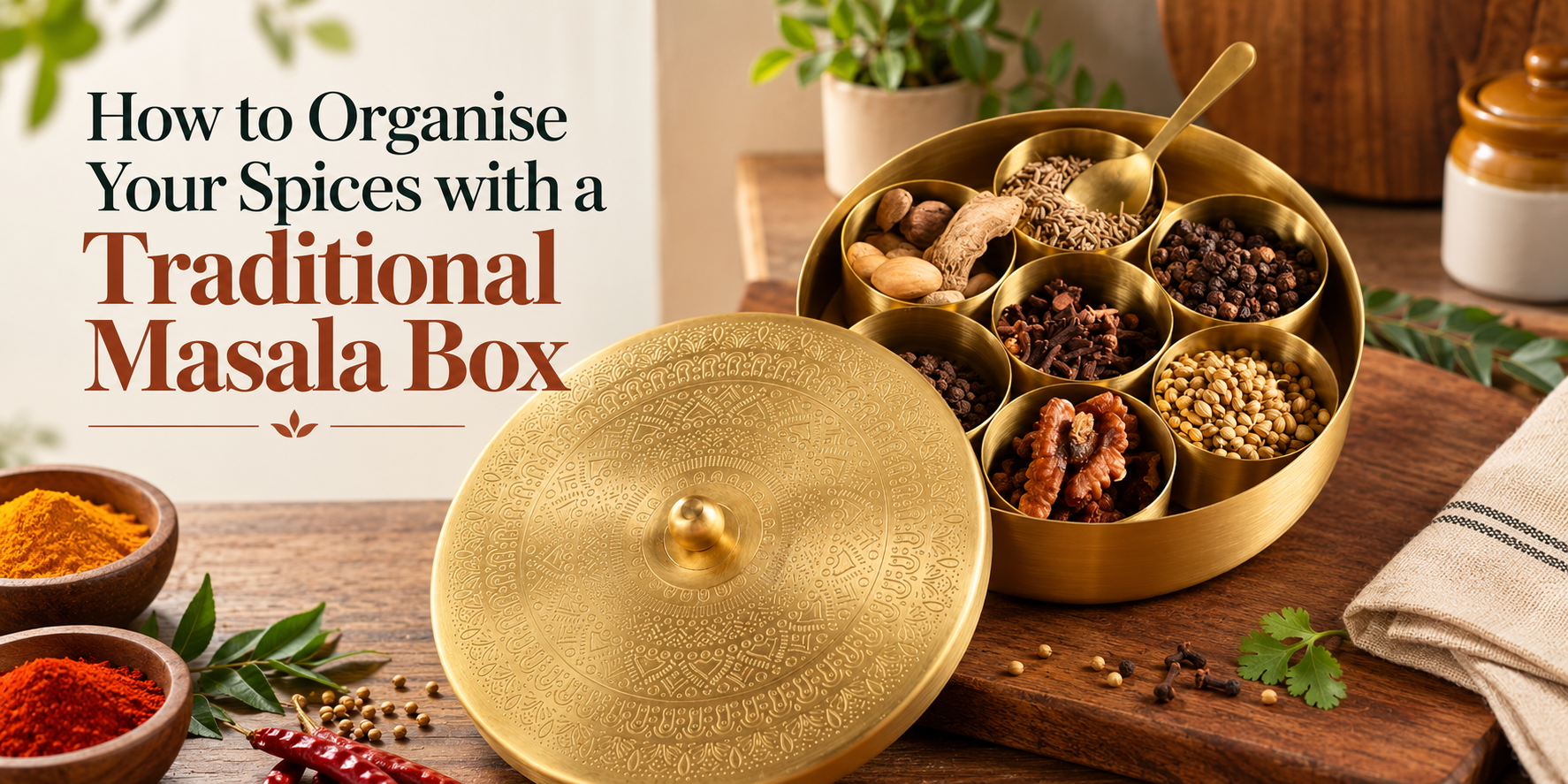
The product shown here features a gold-toned, round container with multiple individual compartments, a decorative engraved lid and a coordinated metallic finish. Its divided interior provides space to organise commonly used ingredients, while its ornamental appearance suits kitchens that feature traditional or contemporary Indian décor.
A traditional spice box is particularly useful for keeping essential seasonings together rather than searching through multiple containers whenever you prepare a meal.
Why Use a Masala Box Instead of Separate Spice Jars?
Separate spice jars are useful for storing large quantities of ingredients, but they can occupy considerable counter or cabinet space when you keep many varieties within reach. A masala box offers a more compact arrangement for the spices you use most frequently.
Its main advantages include:
Convenient access: Keep commonly used spices together near your cooking area.
Better organisation: Give each spice its own compartment to reduce mix-ups.
Space-saving storage: Arrange several everyday spices inside one container.
Easy meal preparation: Reach for the ingredients you need without opening multiple jars.
Traditional appearance: An engraved metal masala box can complement your kitchen accessories and dining décor.
A masala box works best for frequently used spices. Larger quantities and less commonly used ingredients can remain in separate, clearly labelled airtight containers.
Step 1: Choose the Right Spices for Your Masala Box
The first step towards organising a spice box is deciding which ingredients deserve a place in it. Instead of filling every compartment with spices you rarely use, prioritise those that appear regularly in your recipes.
The ideal selection depends on your cooking habits, regional cuisine and family preferences.
Essential Spices for Everyday Indian Cooking
Consider the following ingredients when arranging your masala box:
Turmeric powder: Commonly used in dals, vegetable dishes and curries.
Cumin seeds: A popular ingredient for tempering dals, rice dishes and curries.
Coriander seeds: Useful in tempering or grinding into freshly prepared spice blends.
Red chilli powder: Adds heat and colour according to your preference.
Black peppercorns: Suitable for seasoning savoury dishes and preparing spice blends.
Cloves: Used in selected rice dishes, gravies and aromatic spice mixtures.
Mustard seeds: Frequently used for tempering in many regional Indian cuisines.
Whole or ground coriander: Choose the form you use most often.
Not every masala box needs to contain all these ingredients. If you regularly prepare South Indian food, mustard seeds and urad dal may be more useful than certain whole spices. If you frequently cook biryani, whole spices such as cloves and peppercorns may deserve more space.
Practical tip: Keep a list of the five to seven spices you reach for most often during a typical week. Use that list as the starting point for organising your compartments.
Step 2: Match the Spices to the Compartments
Once you have selected your ingredients, arrange them according to how often you use them and how easily you can identify them.
The compartmentalised design of the pictured traditional masala box allows different spices to sit separately within a single container. Before filling it, check the number and size of the compartments so that your selection fits comfortably.
A Simple Masala Box Arrangement
You can use the following arrangement as a starting point and adjust it to suit your recipes.
Compartment 1: Cumin seeds
Compartment 2: Mustard seeds
Compartment 3: Coriander seeds
Compartment 4: Turmeric powder
Compartment 5: Red chilli powder
Compartment 6: Black peppercorns
Compartment 7: Cloves or another frequently used spice
If your masala box has fewer compartments, combine this system with separate storage jars for less frequently used ingredients. Avoid putting two different spices into the same compartment simply to use every available space.
Arrange Spices According to Your Cooking Routine
A useful arrangement is one that matches the way you cook. If you prepare tadka or tempering frequently, keep cumin and mustard seeds easy to reach. If most of your meals involve curries, position turmeric, chilli powder and coriander among your regular choices.
For a household that prepares a variety of regional dishes, whole spices can occupy compartments that would otherwise remain unused. This makes the spice box more adaptable without forcing you to store ingredients you rarely need.
Step 3: Prepare the Spices Before Filling the Box
Putting spices directly into a masala box without checking their condition can create avoidable storage problems. Prepare the ingredients and container first to keep your spice organisation practical.
Clean and Dry the Box
Before first use, check the manufacturer's cleaning instructions. If the box is suitable for washing, clean it gently and dry every compartment thoroughly before adding spices.
The pictured product has a decorative metallic finish. Because the exact metal and surface coating are not specified, avoid assuming that it is suitable for dishwasher cleaning or prolonged soaking. Follow the seller's care instructions to protect the finish.
Never fill a damp compartment with powdered spices. Moisture can cause clumping and affect the quality of the contents.
Check the Freshness of Your Spices
Before transferring spices from packets or jars, check their smell, appearance and storage condition. Replace ingredients that show signs of moisture, mould or unusual changes.
For best results:
Transfer only the quantity you expect to use within a reasonable period.
Keep the original packaging or purchase details for checking dates.
Use a clean, completely dry spoon for each spice.
Avoid mixing fresh spices with old remnants.
Keep unused bulk supplies in separate airtight containers.
A masala box is intended for convenient daily access, not necessarily for long-term bulk storage. Refilling smaller quantities helps you maintain a fresh, manageable supply.
Step 4: Keep Whole and Ground Spices Separate Where Practical
Whole spices and ground spices do not always have the same storage needs. Ground spices generally lose their aroma more quickly because grinding exposes more of the spice to air.
For this reason, decide which form is most suitable for your everyday cooking.
Whole cumin, mustard seeds, cloves and peppercorns are useful choices for compartments because they are commonly added directly during tempering or cooking. Turmeric powder, chilli powder and ground coriander may also be convenient if you use them frequently.
However, do not assume that every compartment in a traditional masala box is airtight. The lid helps cover the contents, but the level of protection depends on its fit and the product's construction.
If you live in a humid environment, store sensitive ground spices in airtight containers and transfer small amounts into your masala box for daily use. This arrangement provides convenient access while helping limit unnecessary exposure to air and moisture.
Step 5: Store Your Masala Box in the Right Place
Even a well-organised spice box needs a suitable storage location. Heat, direct sunlight and moisture can gradually affect spice quality.
Place your masala box in a cool, dry area that is convenient to reach while cooking.
Where Should You Keep a Masala Box?
A few practical locations include:
A dry kitchen shelf: Suitable when the shelf is away from direct sunlight.
A countertop corner: Convenient if the area is not exposed to splashes, steam or heat.
A kitchen cabinet: Useful for keeping the box away from dust and cooking residue.
A dedicated spice station: Ideal if you use several spice containers alongside your masala box.
Avoid placing the box directly beside a gas burner, over a hot appliance or next to a sink where water can enter the compartments.
Although keeping spices beside the stove may appear convenient, repeated exposure to heat and steam can reduce their quality. Choose a nearby but protected location instead.
Step 6: Maintain Your Masala Box Regularly
A consistent cleaning routine prevents old spice residue from building up and helps you identify ingredients that need replenishing.
The frequency of cleaning depends on the material, how often you use the box and whether spices spill between compartments.
A Simple Maintenance Routine
After everyday use: Wipe away loose spice powder from the rim and exterior using a clean, dry cloth. Close the lid properly after cooking.
During weekly checks: Look for spilled spices, dampness and empty compartments. Wipe the exterior if needed.
When changing spices: Empty the relevant compartment and clean it according to the manufacturer's instructions. Allow it to dry fully before refilling.
When storing the box for an extended period: Remove the spices, clean the container appropriately and dry it completely before putting it away.
For a decorative gold-toned masala box, gentle handling is particularly important. Avoid abrasive scrubbers, harsh cleaning agents and unapproved polishing products that could damage the engraved surface or finish.
If the product is made from brass or another metal, follow the care instructions specific to that material rather than applying a general metal-cleaning method.
Step 7: Choose a Masala Box That Suits Your Kitchen
Organisation becomes easier when your spice box matches your actual needs. Before buying a traditional masala box, consider the following features.
Material and Finish
Masala boxes are available in different materials and finishes, including stainless steel, brass, wood and decorative metal designs. Each offers a different appearance and care routine.
A gold-toned engraved box, such as the one pictured, can suit kitchens where traditional detailing is preferred. However, its appearance alone does not establish the metal composition. Check the product specifications to confirm the material before purchasing.
Number and Size of Compartments
Count the spices you regularly use and compare that number with the available compartments. Larger compartments may be more practical for frequently used spices, while smaller sections can accommodate ingredients used in limited quantities.
Lid Design
A fitted lid helps cover spices between uses. Check how securely it sits and whether the product is intended for everyday spice storage.
If keeping powdered spices fresh is a priority, confirm whether the design offers an airtight seal instead of assuming that any lid provides one.
Ease of Cleaning
Look for a design that allows you to clean the individual compartments without difficulty. Ask about water resistance, polishing requirements and suitable cleaning methods, especially when purchasing a decorative metal product.
Spoons and Additional Accessories
Some masala boxes include small spoons, while others are supplied without them. If you prefer measuring spices rather than pinching them directly, check whether spoons are included or need to be purchased separately.
Price and Overall Value
The price of a masala box can vary according to its material, craftsmanship, size, finish, compartment count and included accessories.
Rather than selecting a product based only on its appearance or lowest price, compare the construction, usability, cleaning requirements and product specifications. A design that fits your everyday cooking habits is likely to be more useful than a decorative box with compartments you rarely use.
Traditional Masala Box vs Separate Spice Containers
Both storage options can work well, but they serve slightly different purposes.
A traditional masala box is convenient for frequently used spices that you want close at hand. Separate airtight containers are generally more suitable for storing larger quantities and ingredients that you use occasionally.
For example, a household that prepares dal, sabzi and everyday curries may keep cumin, mustard seeds, turmeric and chilli powder in its masala box. Larger supplies of these spices can remain in labelled airtight jars inside a cupboard.
This combination offers convenient access without requiring every ingredient in the kitchen to fit inside one container.
Common Masala Box Organisation Mistakes to Avoid
Small storage mistakes can make your spice box less useful over time. Avoid these common problems:
Overfilling the compartments: Leave enough room to use each spice without spilling it into neighbouring sections.
Mixing different ingredients: Keep each spice separate to avoid altering flavours.
Adding spices to a damp box: Ensure the compartments are completely dry before filling.
Storing too much at once: Refill smaller quantities instead of keeping a large supply exposed to air.
Ignoring the lid fit: Check that the lid is correctly positioned after each use.
Keeping the box near steam: Move it away from the stove, kettle and sink.
Using unsuitable cleaning products: Follow the manufacturer's care instructions to preserve the material and finish.
A few simple habits can make your masala box easier to use and help you keep your kitchen organised.
Why a Traditional Masala Box Makes a Useful Kitchen Accessory
A masala box is more than a container for spices. It brings commonly used ingredients together, reduces the need to search through multiple jars and makes everyday cooking more organised.
The gold-toned, intricately engraved design shown here also combines practical storage with decorative appeal. Its round shape and individual compartments make it suitable for organising a selected range of spices, provided its capacity and material meet your requirements.
For shoppers exploring traditional kitchen accessories at Peepul Tree, a masala box can be a practical addition to a home kitchen or a thoughtful gift for someone who enjoys cooking. Before choosing a design, compare the product's specifications, compartment capacity, lid fit and care requirements.
The best option is one that accommodates the spices you use regularly, is easy to maintain and suits your kitchen's style.
Frequently Asked Questions About Masala Boxes
1. What should I keep in a traditional masala box?
You can store frequently used spices such as cumin seeds, mustard seeds, turmeric powder, red chilli powder, coriander seeds, black peppercorns and cloves. Choose ingredients according to your cooking habits and the number of compartments available.
2. Is a masala box better than separate spice jars?
A masala box is convenient for keeping everyday spices together, while separate airtight jars are useful for bulk storage. Using both options allows you to access frequently used ingredients quickly without exposing your entire spice supply.
3. How do I keep spices fresh in a masala box?
Use a clean, dry container, avoid overfilling it and keep it away from heat, sunlight and moisture. Make sure the lid fits correctly. If the box is not airtight, consider storing ground spices in airtight jars and transferring small quantities for daily use.
4. Can I store powdered spices in a traditional masala box?
Yes, provided the box is clean, dry and suitable for that use. Powdered spices should be protected from moisture and unnecessary air exposure. For longer storage, airtight containers may be a better option.
5. How often should I clean my masala box?
Wipe the exterior and remove loose residue regularly. Clean individual compartments when changing spices or whenever spills occur. Always follow the manufacturer's cleaning instructions and dry the compartments completely before refilling them.
6. Which material is best for a masala box?
The right material depends on your preferences, budget and maintenance requirements. Stainless steel is a practical choice for many kitchens, while brass and decorative metal designs may appeal to shoppers who prefer traditional styling. Confirm the actual material and care instructions before buying.
7. How do I choose the right size masala box?
Consider the number of spices you use daily, the quantity you need to store and the space available in your kitchen. Check the compartment count and dimensions rather than relying on the overall appearance alone.
8. Is a decorative masala box suitable as a gift?
Yes. A traditional masala box can be a thoughtful housewarming or festive gift for someone who enjoys cooking. Look for a design with practical compartments, a well-fitting lid, clear material specifications and manageable cleaning requirements.
Conclusion
Organising your spices with a traditional masala box is a simple way to make everyday cooking more convenient. By selecting the right spices, assigning them to suitable compartments, keeping the container dry and storing it away from heat, you can create a practical system that works for your kitchen.
The gold-toned engraved masala box featured here offers a decorative take on traditional Indian spice storage. When evaluating this style, consider its material, compartment sizes, lid design and care requirements alongside its appearance.
If you are updating your kitchen accessories, explore the masala box options available at Peepul Tree and choose a design that complements your kitchen while meeting your everyday storage needs. A well-chosen spice box can keep your essential ingredients organised, accessible and ready for your next meal.