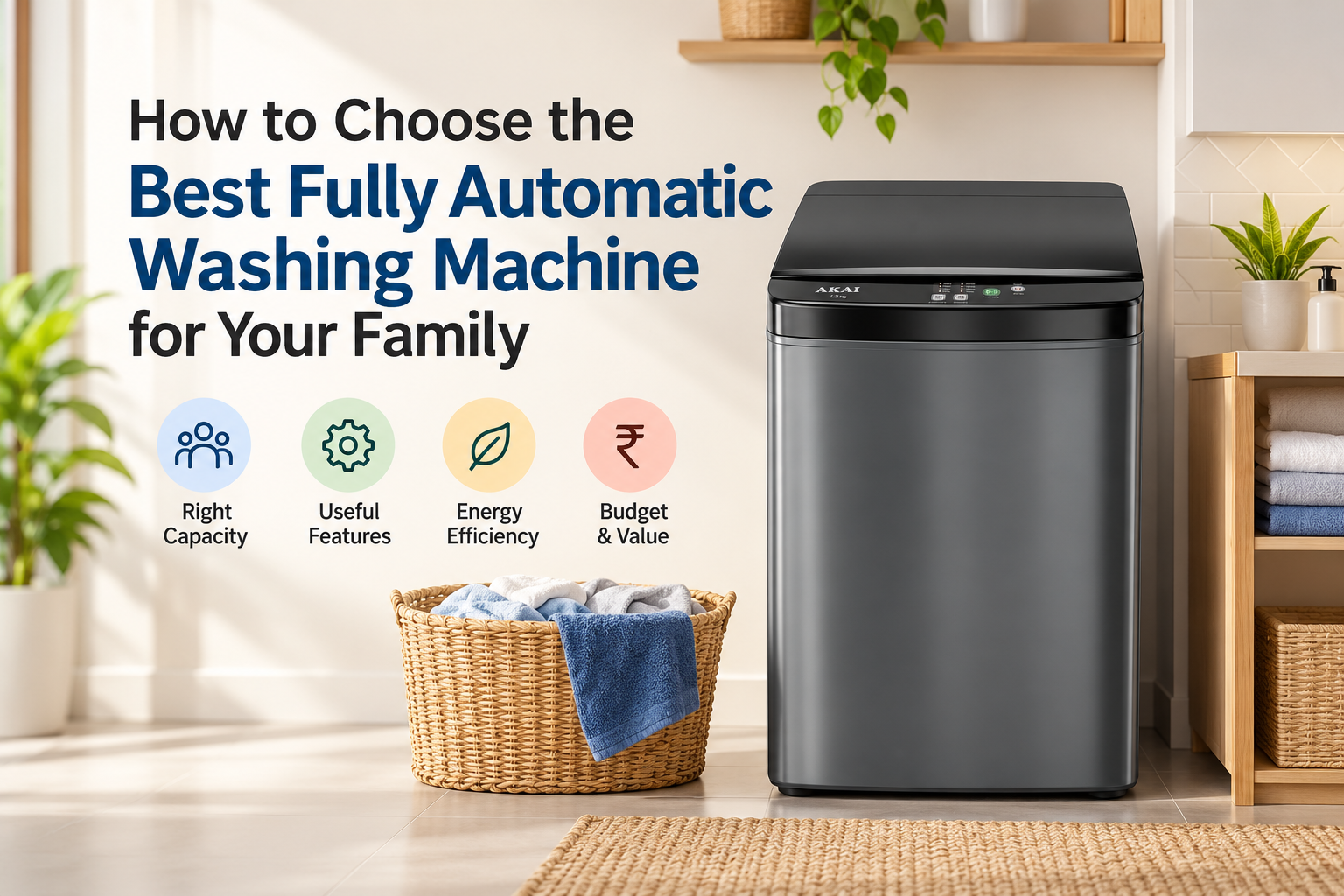
Buying a washing machine is an important decision because the right model can make everyday laundry easier, reduce manual effort, and help you manage clothes more efficiently. However, choosing the best fully automatic washing machine for your family involves more than comparing prices or selecting the model with the most features. You need to consider your family size, laundry habits, available space, water supply, electricity consumption, and the types of clothes you wash regularly.
A washing machine suitable for a couple may not meet the needs of a family with children. Similarly, a large household that washes blankets, bedsheets, and heavy garments frequently may benefit from a higher-capacity model. Understanding these requirements before shopping helps you choose a machine that delivers practical value over time.
If you are planning to buy a fully automatic washing machine, this guide explains the essential features, capacities, technologies, and buying factors to consider. It also highlights how to compare different models and select an option that suits your household budget.
What Is a Fully Automatic Washing Machine?
A fully automatic washing machine handles the washing and rinsing cycles without requiring you to transfer clothes between separate washing and spinning tubs. Once you load your laundry, add the appropriate detergent, select a suitable wash program, and start the machine, it manages the selected cycle automatically.
Depending on the model, a fully automatic washing machine may offer features such as multiple wash programs, automatic water-level control, different spin speeds, quick wash settings, and specialised cycles for different fabrics.
These machines are available in two main types: top-load and front-load.
Top-Load Fully Automatic Washing Machine
A top-load washing machine has a lid at the top, allowing you to load clothes from above. Many households prefer this design because loading and unloading can be convenient without bending as much as with a front-load model.
Consider a top-load machine if you:
Prefer loading clothes while standing.
Want a straightforward washing experience.
Frequently add laundry during the day and prefer a model that accommodates your routine.
Need a design that fits your available laundry space.
The availability of features such as adding clothes mid-cycle depends on the specific model and wash stage.
Front-Load Fully Automatic Washing Machine
A front-load washing machine has a door at the front and uses a horizontal drum to move clothes through the wash.
This design can be suitable if you want to prioritise fabric care, efficient washing, and potentially lower water consumption. Actual performance depends on the model, selected program, load size, and operating conditions.
Consider a front-load machine if you:
Frequently wash delicate garments.
Want to compare models with advanced fabric-care programs.
Prefer a design that may allow a compatible dryer or storage surface above the machine.
Are comfortable loading clothes through a front-facing door.
Neither type is automatically the best choice for every household. Your decision should depend on your laundry requirements, budget, and the specifications of the models you are comparing.
1. Choose the Right Washing Machine Capacity for Your Family
Capacity is one of the most important factors when buying a fully automatic washing machine. It determines the weight of dry laundry the machine is designed to handle in a load.
Choosing a machine that is too small may force you to run multiple cycles. Buying a much larger model than you need can increase the initial purchase cost and may be less practical for your available space.
Use the following recommendations as a starting point.
6kg to 6.5kg Capacity
A smaller-capacity washing machine may suit a single person or a couple with light to moderate laundry requirements.
It can be appropriate if you mostly wash everyday clothing, lightweight garments, and smaller loads. However, if you frequently wash bedsheets, towels, or bulky garments, check the manufacturer's load recommendations before choosing this capacity.
7kg to 7.5kg Capacity
A 7kg or 7.5kg fully automatic washing machine can be a practical option for small families of two to three people, depending on how frequently they do laundry.
This capacity may work well for households that wash clothes regularly and do not often need to clean several bulky items together.
8kg to 9kg Capacity
An 8kg to 9kg washing machine is worth considering for families of three to five people, particularly when children generate additional laundry or the household washes towels and bedsheets frequently.
A larger capacity can help accommodate bigger loads, provided the load is distributed correctly and stays within the machine's limits.
10kg and Above
Large families or households with frequent heavy laundry may benefit from a machine with a capacity of 10kg or more.
Before purchasing, consider whether you regularly generate enough laundry to use the additional capacity. Also check the machine's external dimensions and installation requirements.
Practical tip: Capacity should reflect your usual laundry load, not just the number of people in your home. A family of four that washes clothes every day may have different requirements from a family of four that does laundry twice a week.
Avoid overloading the drum, even when the machine appears to have enough physical space. Overloading can affect washing performance and place additional strain on components.
2. Decide Between a Top-Load and Front-Load Model
The choice between a top-load and front-load fully automatic washing machine affects everyday convenience, washing performance, space planning, and operating costs.
A top-load model may be more suitable if easy loading is your priority. A front-load model may appeal to you if fabric care and water efficiency are important considerations.
Before making a decision, compare the following factors:
Loading convenience: Consider how easily you can load and remove clothes, especially if you have back discomfort or limited mobility.
Water consumption: Compare the manufacturer's water-consumption specifications for comparable wash programs.
Fabric care: Check whether the machine offers dedicated programs for delicate clothes, woollens, or other fabrics you wash regularly.
Installation: Measure the available area and allow sufficient clearance for the lid or door to open fully.
Maintenance: Review drum-cleaning instructions, gasket care where applicable, and service requirements.
Purchase price: Compare the actual price of models with similar capacities and features.
Do not assume that every front-load machine is more efficient than every top-load machine. Compare the specific models, because design, technology, and wash settings influence performance.
3. Look for Wash Programs That Match Your Laundry Habits
A washing machine with numerous programs is not necessarily the best choice if you rarely use them. Prioritise programs that solve your family's everyday laundry problems.
Daily Wash
A daily wash program is useful for routine clothing such as T-shirts, shirts, trousers, and other everyday garments. Check the recommended load size and cycle duration before using it for a full drum.
Quick Wash
Quick wash programs can help clean lightly soiled clothes when you are short on time. However, they may not be suitable for heavily stained garments or large loads.
Delicate or Gentle Wash
This program is useful for garments that require gentler handling. Always follow the care label on the clothing, as some fabrics may require hand washing or specialist cleaning.
Heavy or Intensive Wash
If your family frequently washes heavily soiled clothing, look for a suitable intensive program. Confirm which fabrics and load sizes are allowed for the cycle.
Bedding or Bulky Items
A bedding program may be helpful for households that regularly wash bedsheets and other compatible bulky items. Check the machine's maximum load and instructions for blankets or comforters before washing them.
Drum Clean
A drum-cleaning program can help maintain the washing machine by removing residue and buildup. Follow the manufacturer's cleaning schedule and instructions for detergent use.
Buying recommendation: Choose a machine with reliable everyday, quick, gentle, and cleaning options before paying extra for specialised programs you may never use.
4. Compare Electricity and Water Consumption
The purchase price is only one part of the cost of owning a fully automatic washing machine. Electricity and water consumption can also affect your household expenses.
A machine that fits your laundry routine and uses resources efficiently may provide better long-term value than a cheaper model with higher operating costs.
Check Energy-Efficiency Information
For models sold in India, review the applicable Bureau of Energy Efficiency (BEE) label where available. Check the rating, validity period, and other details shown on the actual product.
Do not rely on the star rating alone. Compare the available consumption figures for models of similar capacity and type.
Understand Water Consumption
Water usage varies according to the machine's design, wash program, load size, and settings. Review the manufacturer's specifications and consider your household's water availability.
If your home relies on a storage tank or has limited water supply, check the model's water-inlet requirements and whether its recommended operating conditions match your setup.
Use the Machine Efficiently
You can also manage operating costs by following a few simple practices:
Run reasonably full loads without exceeding the rated capacity.
Use the correct amount of detergent for your load and water conditions.
Select an appropriate wash program instead of automatically choosing the longest cycle.
Clean the drum and filters according to the manufacturer's instructions.
Avoid unnecessary repeated washing of lightly soiled clothes.
These habits can help you use your washing machine more effectively without compromising proper garment care.
5. Check the Motor, Spin Speed, and Washing Technology
Technical features can influence the machine's performance, but you should evaluate them according to your needs rather than choosing a model based on specifications alone.
Inverter Technology
Some fully automatic washing machines use inverter technology to regulate motor operation according to the load and operating conditions.
Potential benefits may include more controlled motor operation and improved energy efficiency, depending on the design. Actual electricity consumption, noise levels, and durability vary by model.
Before paying extra for an inverter model, compare its price, energy information, motor warranty, and service coverage with those of conventional alternatives.
Spin Speed
Spin speed refers to how quickly the drum rotates during the spin cycle, usually measured in revolutions per minute (RPM).
A higher spin speed can help remove more water from suitable fabrics, potentially reducing drying time. However, the highest speed is not appropriate for every garment.
Check whether the machine allows you to adjust the spin speed. This is useful when washing delicate items that require gentler treatment.
Drum Design
Drum design can influence how clothes move during washing. Look for clear product specifications explaining the drum material and any fabric-care features.
Avoid assuming that a particular drum design guarantees better cleaning for every type of clothing. Consider the complete wash system and the programs available.
6. Measure Your Space Before Buying
A washing machine may have the right capacity and features but still be unsuitable if it does not fit your home.
Measure the installation area before ordering a model online or visiting a store.
Check these points:
Width and depth: Measure the available floor space, including room for hoses and connections.
Height: Confirm that the machine fits beneath shelves, counters, or cabinets.
Door or lid clearance: Ensure that the front door or top lid can open fully.
Water connection: Check the required inlet connection and recommended water pressure.
Drainage: Confirm that the drain arrangement matches the installation instructions.
Electrical supply: Ensure that a suitable, properly grounded electrical connection is available.
Movement and access: Check whether the machine can pass through doorways, staircases, and narrow corridors during delivery.
For front-load machines, remember to account for the space needed to open the door and remove laundry. For top-load machines, check the overhead clearance required for the lid.
If you live in a rented apartment or have a compact utility area, these measurements are particularly important.
7. Set a Budget and Compare the Total Cost
The best fully automatic washing machine is not necessarily the most expensive one. The right purchase balances capacity, useful features, energy performance, reliability, and after-sales support.
When comparing prices, consider the following costs and specifications:
Purchase price: Check the current selling price, discounts, and available payment offers.
Installation: Confirm whether installation and demonstration are included.
Warranty: Read the warranty terms for the complete product and individual components.
Maintenance: Review the recommended cleaning and servicing requirements.
Operating expenses: Consider electricity and water consumption based on your usage.
Service access: Check whether authorised service is available in your area.
A lower-priced model with the right capacity and essential wash programs may be a better purchase than a premium machine with features your family will rarely use.
Similarly, a more expensive model may be worth considering if its documented efficiency, convenient programs, or warranty terms meet needs that matter to your household.
Compare the final payable price rather than relying only on the advertised discount.
8. Evaluate Warranty and After-Sales Service
A washing machine is a long-term household appliance, so access to support matters after the purchase.
Before placing an order, review the warranty document rather than relying solely on promotional claims.
Pay attention to:
The warranty period for the machine.
Whether the motor has a separate warranty.
Which parts and labour costs are covered.
Exclusions relating to installation, misuse, or external damage.
The process for requesting repairs.
Availability of authorised service centres in your location.
Also check whether the warranty requires installation by an authorised technician. Following the prescribed installation procedure can help avoid preventable problems.
For buyers considering Akaiindia washing machines, reviewing the specifications, warranty conditions, installation requirements, and current service information for the individual model is a sensible step before purchase.
9. Avoid These Common Washing Machine Buying Mistakes
Even a well-reviewed washing machine may not be suitable for your household if you overlook important practical details.
Choosing Capacity Based Only on Family Size
Family size is a useful starting point, but laundry frequency and the types of items you wash are equally important. Think about your usual weekly washing routine before selecting a capacity.
Paying for Unnecessary Features
Wi-Fi controls, specialised programs, or additional settings may be useful for some households but unnecessary for others. Prioritise the features you will actually use.
Ignoring Installation Requirements
Insufficient space, unsuitable drainage, or an incompatible water connection can complicate installation. Check these requirements before ordering.
Comparing Prices Without Comparing Specifications
Two machines may have different capacities, energy ratings, wash programs, and warranty coverage. Compare similar models to understand whether the price difference is justified.
Ignoring Maintenance
Detergent residue, trapped lint, and moisture can contribute to odours or cleaning issues. Check the cleaning requirements and follow the manufacturer's recommendations.
Assuming Every Fabric Can Use the Same Program
Different materials need different washing conditions. Read garment care labels and select the appropriate program and detergent.
10. How to Choose the Right Akaiindia Washing Machine
When exploring fully automatic washing machines from Akaiindia, begin by identifying the features that matter most to your family. Instead of selecting a model based on appearance or price alone, compare the available specifications against your actual requirements.
Use this practical checklist before making your final decision.
For a small household: Focus on a suitable capacity, simple controls, everyday wash programs, and convenient installation.
For a family with children: Consider a larger capacity if laundry loads are frequent, along with quick wash options, suitable stain-care programs, and flexible wash settings.
For a large household: Compare higher-capacity models, load recommendations for bulky items, energy information, and the availability of the wash programs you use most often.
For a budget-conscious buyer: Prioritise the right capacity, essential wash programs, operating efficiency, warranty coverage, and a price that fits your budget.
For a compact home: Measure the installation area carefully and confirm door or lid clearance before ordering.
Visit the Akaiindia website to review the currently available washing machine models and compare their specifications, prices, features, and warranty terms. Product availability and specifications may vary, so use the details listed for the individual model when making your final selection.
Frequently Asked Questions
1. Which fully automatic washing machine is best for a family of four?
An 8kg washing machine can be a useful starting point for a family of four, especially if the household washes clothes, towels, and bedsheets regularly. However, a 7kg or 7.5kg model may be sufficient for lighter laundry needs, while a larger capacity may suit families that wash bulky items frequently.
2. Is a top-load or front-load fully automatic washing machine better?
A top-load model may be more convenient for loading clothes from above, while a front-load model may appeal to buyers prioritising fabric care and water efficiency. Compare the individual models' specifications, features, operating costs, and installation requirements before deciding.
3. What capacity should I choose for a fully automatic washing machine?
A 6kg to 6.5kg model may suit one or two people, 7kg to 7.5kg may work for smaller families, and 8kg to 9kg can suit many medium-sized households. Larger families or those with frequent bulky laundry may need 10kg or more. These are general guidelines, not fixed rules.
4. Does a fully automatic washing machine consume more electricity?
Electricity consumption depends on the model, wash program, load, temperature settings, and frequency of use. Compare applicable energy-efficiency labels and manufacturer specifications, and select programs appropriate for your laundry.
5. Is inverter technology necessary in a fully automatic washing machine?
Inverter technology can offer advantages in motor control and energy efficiency, depending on the model. However, it is not the only factor that determines performance. Compare consumption information, motor warranty, price, and service support before deciding whether the additional cost is worthwhile.
6. Can I wash blankets in a fully automatic washing machine?
Some machines can wash compatible blankets, but the permitted item size, fabric type, and dry-load weight depend on the model. Check the manufacturer's instructions before washing bulky items, and never force a blanket into a drum that is too small.
7. How long does a fully automatic washing machine take to wash clothes?
Cycle duration varies according to the machine, selected program, load size, water conditions, and additional settings. Quick wash cycles are generally intended for smaller, lightly soiled loads, while intensive or specialised programs may take longer.
8. What should I check before buying a fully automatic washing machine online?
Compare the capacity, machine dimensions, wash programs, energy information, current price, warranty conditions, installation requirements, delivery availability, and authorised service support. Read the product specifications carefully and confirm that the model suits your household before ordering.
Conclusion
Choosing the best fully automatic washing machine for your family becomes easier when you start with your everyday laundry needs. Select a capacity that matches your usual load size, decide whether a top-load or front-load design suits your home, and prioritise useful wash programs, energy efficiency, installation compatibility, and dependable after-sales support.
Remember that the best model is not necessarily the one with the most features or the lowest price. It is the one that handles your family's laundry comfortably while offering practical value throughout its use.
If you are planning to upgrade your laundry setup, compare the available Akaiindia fully automatic washing machines and shortlist the models that match your family size, preferred features, and budget. Review the latest specifications and warranty details before choosing the model that fits your home.
Make a more informed buying decision with Akaiindia by choosing a washing machine that suits your family's laundry routine, space, and budget.