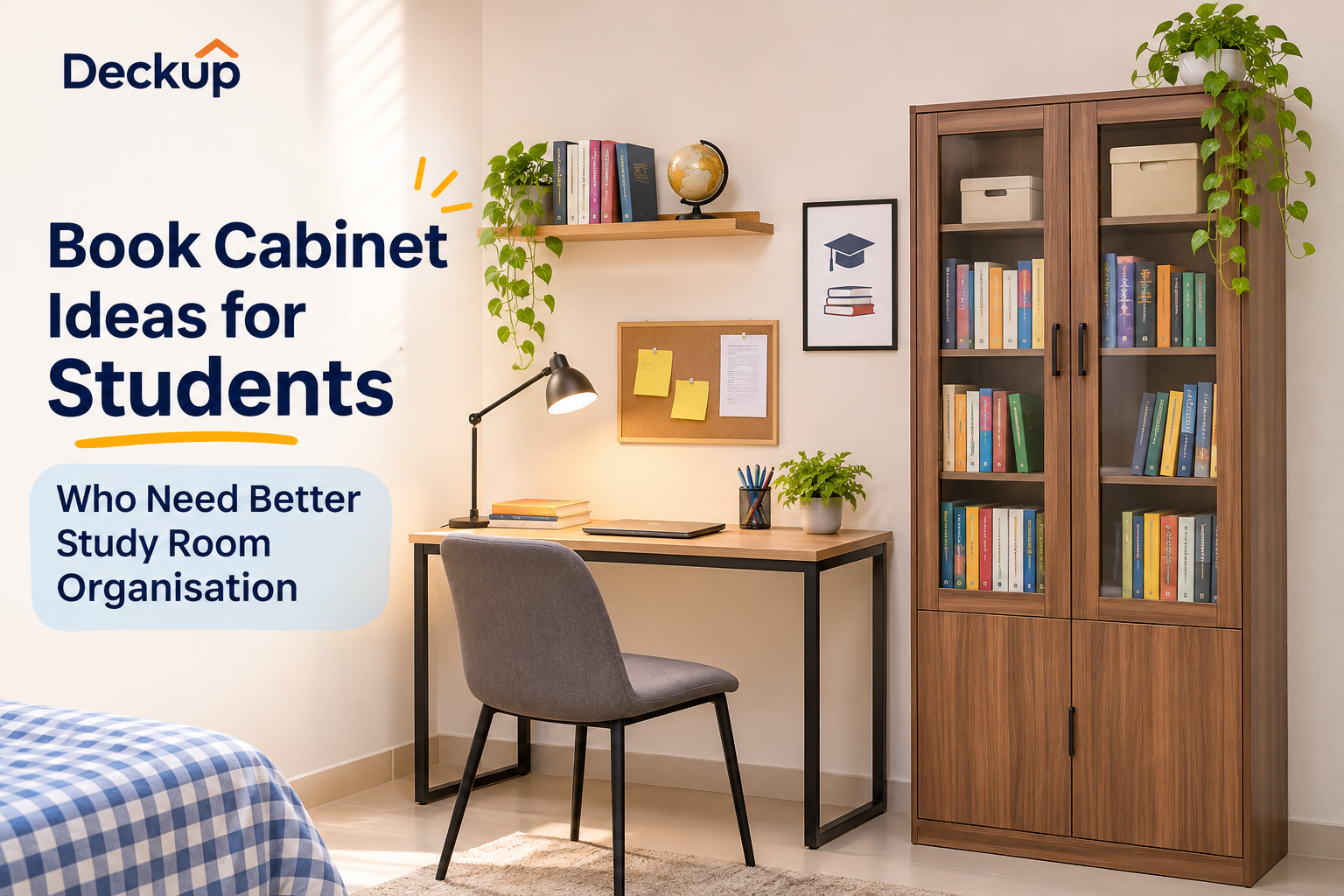
A well-organised study room can make everyday learning more comfortable and productive. Students often deal with textbooks, notebooks, reference materials, stationery, assignments and other study essentials. When these items do not have dedicated storage spaces, desks become cluttered, important materials are difficult to find, and the study area gradually loses its functionality.
A Book Cabinet is a practical furniture solution that helps students organise their learning materials while making better use of available room space. Whether it is a compact study corner in a bedroom or a dedicated study room, the right storage unit can keep books accessible, protect them from dust and create a more organised environment.
However, choosing a book cabinet involves more than selecting an attractive design. Students need to consider storage capacity, shelf arrangement, cabinet dimensions, material, accessibility and compatibility with existing study furniture.
Let's explore practical book cabinet ideas that can help students organise their study rooms and choose storage furniture that suits their everyday requirements.
Why Do Students Need a Book Cabinet in Their Study Room?
Students use different types of learning materials throughout the academic year. School textbooks, college reference books, competitive examination guides, notebooks and personal documents can quickly occupy valuable space.
Keeping everything on a study table is not always practical. A dedicated book storage cabinet provides separate storage areas and helps maintain a consistent organisation system.
Here are some important benefits.
1. Keeps Study Materials Organised
A book cabinet allows students to arrange their books according to subjects, academic years or frequency of use. For example, mathematics and science textbooks can occupy one section, while reference books and previous examination papers can be stored separately.
This arrangement reduces the time spent searching for specific materials.
2. Reduces Study Table Clutter
A study table should primarily provide enough space for reading, writing and using a laptop. When books and stationery occupy the entire surface, completing assignments becomes inconvenient.
A nearby book cabinet provides additional storage without requiring students to place everything on their desk.
3. Makes Better Use of Available Space
Students living in smaller bedrooms or shared accommodation may not have enough room for multiple storage units.
A compact bookshelf cabinet or vertical book storage unit can use available wall space efficiently while keeping the floor area relatively clear.
4. Helps Protect Books and Documents
Books stored carelessly can accumulate dust, develop bent corners or become damaged due to accidental spills.
A book cabinet with doors can provide additional protection from everyday dust and help keep frequently used materials in better condition.
7 Practical Book Cabinet Ideas for an Organised Student Study Room
The best storage arrangement depends on the number of books, room dimensions and daily study habits. Here are seven useful ideas students can consider.
1. Choose a Compact Book Cabinet for Small Study Rooms
A compact book cabinet is suitable for students who have limited floor space but still need dedicated storage for their academic materials.
Instead of purchasing a large storage unit, look for a design that provides sufficient shelving within a smaller footprint.
Consider the following features:
Multiple shelves for arranging books vertically.
A compact design that fits beside a study table.
Adequate shelf depth for standard textbooks.
A stable structure suitable for everyday use.
A finish that complements existing bedroom furniture.
For example, a student preparing for board examinations may need separate spaces for textbooks, practice books and notebooks. A compact cabinet with appropriately sized shelves can accommodate these materials without occupying unnecessary room space.
2. Use a Book Cabinet with Doors for Protected Storage
Students often have books that they do not need every day. These may include older textbooks, additional reference materials, certificates and important academic documents.
A book cabinet with doors can be useful for storing such items away from everyday dust and maintaining a cleaner appearance.
Closed storage is particularly useful when the study area is part of a shared bedroom or living space.
When selecting this design, check:
Door opening clearance.
Handle quality and ease of operation.
Interior shelf arrangement.
Overall cabinet dimensions.
Accessibility of frequently used materials.
Students can keep daily textbooks on easily accessible shelves while storing less frequently used books behind the doors.
3. Select a Tall Book Cabinet to Use Vertical Space
A tall book cabinet can be a practical option when the study room has limited floor space but sufficient vertical clearance.
Vertical storage allows students to arrange more books without spreading storage furniture across the room.
This arrangement works particularly well in bedrooms where the study table, bed and wardrobe already occupy most of the available floor area.
Before purchasing a tall cabinet, consider its overall height, width and depth. Also check whether the furniture can be safely secured against tipping, particularly in homes with younger children.
Avoid placing heavy books on shelves that are not designed to support their weight. Always follow the manufacturer's load-capacity instructions.
4. Create a Subject-Wise Storage Arrangement
A book cabinet becomes more useful when students organise its shelves according to their academic requirements.
Rather than placing books randomly, assign specific sections to different subjects or categories.
For example:
Upper shelves: Reference books and additional learning materials.
Middle shelves: Frequently used textbooks and notebooks.
Lower shelves: Heavier textbooks and examination preparation guides.
Separate storage sections: Documents, stationery and supplementary materials.
Students can also use labelled folders or small storage organisers to separate loose notes.
This arrangement makes it easier to locate materials before classes, during revision sessions and while completing assignments.
5. Match the Book Cabinet with the Study Table
A coordinated study room can feel more organised when its furniture shares complementary colours, finishes and design elements.
Students can select a book cabinet that matches their study table or creates a balanced contrast with the existing furniture.
For instance, a neutral wood-finish cabinet can complement a simple study table, while a contemporary design may suit a room with modern furniture.
However, matching furniture should not come at the cost of functionality.
Before selecting a cabinet, ensure that:
Its height does not obstruct natural light.
Its doors or shelves do not interfere with the study table.
There is sufficient space to access stored books.
The furniture does not make the room feel overcrowded.
A practical arrangement is to position the book cabinet beside or near the study table so students can access their materials without repeatedly moving around the room.
6. Use a Multi-Purpose Book Cabinet for Different Study Essentials
Students do not only need space for books. They also use stationery, files, notebooks, project materials and sometimes electronic accessories.
A multi-purpose book cabinet can help accommodate different categories of study essentials in one furniture unit.
Look for a design that offers a combination of open shelves and enclosed storage, depending on availability.
Open shelves are useful for frequently accessed books, while closed sections can accommodate documents and items that students prefer to keep out of sight.
Before buying, evaluate the actual storage requirements instead of choosing a cabinet simply because it has more compartments.
7. Arrange a Dedicated Reading and Storage Corner
Students who enjoy reading beyond their academic syllabus can create a small reading corner using a book cabinet.
Place the cabinet near a comfortable chair or beside the study area, provided there is enough room for movement.
Organise the shelves into categories such as:
Academic textbooks.
Fiction and non-fiction books.
Competitive examination materials.
General knowledge and reference books.
Personal reading collections.
Keep the most frequently used books at an accessible height.
This arrangement creates a dedicated place for reading and encourages students to maintain a consistent storage routine.
How to Choose the Right Book Cabinet for Students
Different students have different storage requirements. A school student may need space for textbooks and notebooks, while a college student may require additional capacity for reference books, files and project materials.
Consider these factors before making a purchase.
1. Storage Capacity
Start by estimating how many books and other materials need to be stored.
Count the existing books and consider whether the collection is likely to increase during the next academic year.
A cabinet with too little storage may become overcrowded quickly. On the other hand, purchasing an excessively large unit can waste valuable room space.
Choose a storage capacity that meets current needs while allowing some room for additional books.
2. Cabinet Dimensions
Measure the available area before purchasing a book cabinet online.
Check the following measurements:
Height: Determines how much vertical storage is available.
Width: Determines how much wall space the cabinet occupies.
Depth: Determines whether textbooks and larger reference books fit comfortably.
Also account for door movement, walking space and access to nearby furniture.
Never assume that a product will fit simply because it looks compact in an online photograph. Check the listed product dimensions carefully.
3. Material and Construction
The material affects the appearance, maintenance requirements and durability of a book cabinet.
Engineered wood is a commonly used furniture material that offers different finishes and design possibilities. Solid wood is another option, although it may come with different maintenance and pricing requirements.
When comparing options, check:
Material specifications.
Panel thickness, where provided.
Shelf construction.
Edge finishing.
Hardware and fittings.
Manufacturer-provided load capacity.
The quality of construction matters because textbooks and reference books can become heavy when stored together.
4. Shelf Arrangement
Not all books have the same dimensions. Some textbooks are thick, while reference books and files may require additional vertical clearance.
Look for a cabinet with shelf spacing that accommodates the materials you own.
If the product offers adjustable shelves, check the available adjustment options.
A well-planned shelf arrangement makes storage more convenient and prevents students from stacking books unnecessarily.
5. Open Shelves or Closed Cabinets
Both designs offer different advantages.
Open bookshelves provide quick access to frequently used books and make it easier to view stored materials.
Closed book cabinets offer a more concealed storage arrangement and can help reduce everyday dust exposure.
The right choice depends on the study room environment, cleaning routine and storage preferences.
6. Design and Finish
A book cabinet should complement the existing study room furniture.
Neutral finishes, wood-inspired textures and simple designs can work well in different bedroom and study room settings.
Consider the room's wall colour, study table finish and available lighting before choosing a design.
7. Assembly and Maintenance
Before ordering a book cabinet online, check whether the product requires self-assembly or comes with installation support.
Review the assembly instructions, included fittings and available customer support.
Also consider everyday maintenance. Furniture surfaces should be cleaned according to the manufacturer's care instructions, and spills should be addressed promptly.
Common Mistakes Students Should Avoid When Buying a Book Cabinet
A storage unit may look suitable online but may not meet practical requirements once installed.
Avoid these common mistakes:
Buying without measuring the room: Always measure the available space and compare it with the product's listed dimensions.
Ignoring shelf load capacity: Books can be heavier than they appear. Check the recommended weight limit for individual shelves.
Choosing appearance over functionality: Attractive designs are useful only when they provide sufficient storage and accessibility.
Overlooking book dimensions: Check shelf depth and internal height to ensure larger textbooks and files fit properly.
Not considering future storage needs: Students often accumulate additional study materials throughout the academic year. Allow some room for growth.
Ignoring assembly requirements: Understand whether installation is required and whether the necessary fittings and instructions are included.
Is Buying a Book Cabinet Online a Good Option for Students?
Buying a book cabinet online gives students the opportunity to compare different designs, dimensions, finishes and storage arrangements before making a decision.
Instead of visiting multiple furniture stores, buyers can review product specifications and evaluate which option suits their study room.
However, it is important to examine the product details carefully.
Before placing an order, check:
Complete product dimensions.
Material and finish information.
Number and arrangement of shelves.
Storage capacity and weight recommendations.
Product photographs from different angles.
Assembly and installation details.
Delivery conditions and return policy.
Warranty information, where applicable.
Also compare the overall price rather than looking only at the displayed product cost. Delivery, installation and other applicable charges may affect the final amount.
For students working with a limited furniture budget, a compact and functional book cabinet may be a more practical purchase than a larger unit with storage features they do not need.
How DeckUp Book Storage Furniture Can Complement a Student's Study Space
When planning a student study room, selecting furniture that supports everyday requirements is important.
DeckUp offers furniture options for home organisation and study spaces, making it a brand worth considering when comparing storage and study furniture.
Students exploring DeckUp's bookshelf and storage furniture options can evaluate different designs based on their available room space, book collection and preferred furniture finish.
A coordinated setup can include:
A study table with sufficient writing and working space.
A bookshelf or book cabinet for textbooks and reference materials.
Additional storage for notebooks and stationery.
A comfortable chair suitable for regular study sessions.
The goal is to create a functional study environment where every item has a designated place.
When considering DeckUp furniture, review the individual product specifications, dimensions and storage features to identify an option that matches your requirements.
Frequently Asked Questions About Book Cabinets
1. Which book cabinet is best for students?
The best book cabinet for students depends on the number of books, available room space and storage requirements. A compact cabinet with multiple shelves is suitable for smaller study rooms, while taller units can provide additional vertical storage.
2. Is a book cabinet better than an open bookshelf?
A book cabinet with doors provides enclosed storage and helps reduce everyday dust exposure. An open bookshelf offers easier access and visibility. The better option depends on whether you prioritise protected storage or quick access to books.
3. What should I check before buying a book cabinet online?
Check the dimensions, material, shelf depth, storage capacity, construction quality, assembly requirements and warranty details. Also review the product photographs and return policy before ordering.
4. Which material is suitable for a student book cabinet?
Engineered wood is a commonly available option for student furniture because it offers different finishes and designs. Solid wood is another alternative. Compare construction quality, maintenance requirements and overall pricing before choosing.
5. How can I organise books inside a book cabinet?
Arrange books according to subjects, academic years or usage frequency. Keep frequently used textbooks at accessible heights and place heavier books on lower shelves, while following the cabinet's recommended load capacity.
6. What size book cabinet is suitable for a small study room?
A compact or vertically designed book cabinet can work well in a small study room. Measure the available floor and wall space before selecting a unit, and ensure that its depth and height suit your storage requirements.
7. How do I maintain a book cabinet?
Clean the cabinet regularly using a soft, dry or slightly damp cloth as recommended by the manufacturer. Avoid excessive moisture, distribute books evenly across shelves and follow the product's maintenance instructions.
8. Can a book cabinet be used to store items other than books?
Yes. Depending on its shelf design and weight capacity, a book cabinet can also accommodate notebooks, files, stationery organisers, magazines and other study essentials. Avoid storing heavy objects beyond the recommended shelf capacity.
Conclusion
An organised study room can make everyday learning more convenient by keeping essential materials accessible and reducing unnecessary clutter. A well-selected book cabinet provides dedicated storage for textbooks, notebooks, reference materials and other academic essentials while making better use of available space.
Students should consider storage capacity, cabinet dimensions, shelf arrangement, material, construction and overall pricing before purchasing. The right choice should fit comfortably into the study room and support changing academic requirements.
Whether you need a compact storage unit for a small bedroom or a larger cabinet for an extensive book collection, explore furniture options from DeckUp and compare their specifications to find a suitable addition to your study space.
A thoughtfully organised study room starts with choosing furniture that makes everyday learning and storage easier.