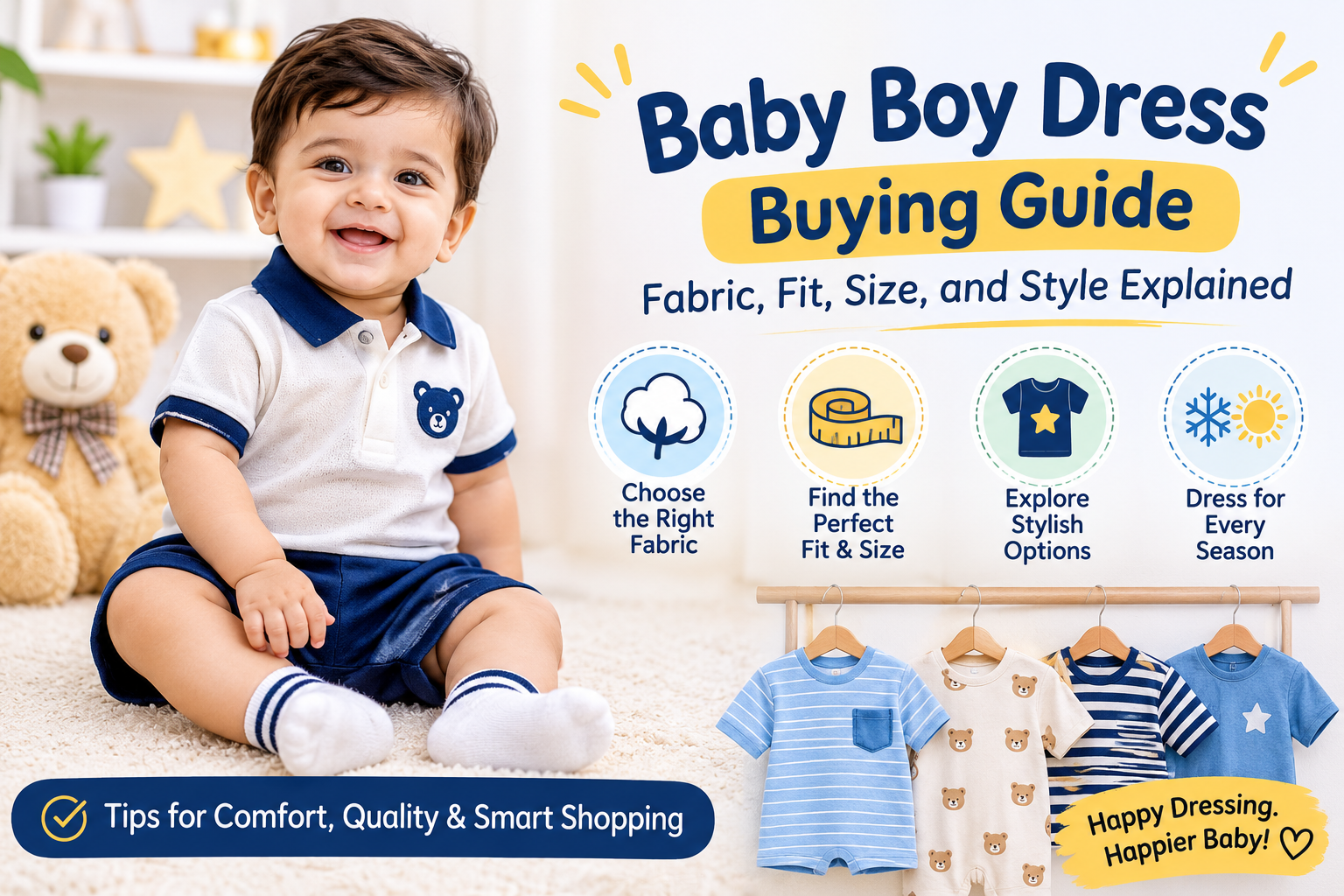
Choosing the right baby boy dress involves more than picking an attractive design. Parents need to consider fabric quality, comfort, sizing, ease of dressing, and suitability for different occasions. Babies have delicate skin, spend much of their time sleeping or moving around, and need clothing that allows them to stay comfortable throughout the day.
Whether you are shopping for a newborn, a growing infant, or a toddler, selecting the right baby boy clothing can make everyday dressing easier. From soft cotton outfits to stylish occasion wear, understanding what makes a good baby outfit helps parents make better purchasing decisions.
This buying guide explains everything you should consider before buying a baby boy dress, including fabric choices, fitting, size selection, seasonal requirements, styling options, and common shopping mistakes.
1. Understand Your Baby's Clothing Needs Before Shopping
Before choosing a baby boy dress, think about when and where your baby will wear it. An outfit suitable for a family celebration may not be the most practical choice for everyday use.
Different situations require different clothing features.
Everyday Baby Clothes
For daily wear, comfort and practicality should be the main priorities. Babies need clothes that allow easy movement and do not create unnecessary irritation.
Look for:
Soft and breathable fabrics.
Comfortable neck openings.
Stretchable waistbands.
Lightweight construction.
Easy-to-use buttons, snaps, or closures.
Designs that allow convenient diaper changes.
Cotton baby boy outfits, rompers, and comfortable T-shirts are practical choices for regular use.
Special Occasion Outfits
For birthdays, festivals, family gatherings, and celebrations, parents may prefer more stylish baby boy dresses.
Some popular options include:
Printed baby boy outfits.
Coordinated T-shirt and bottom sets.
Stylish shirts with comfortable trousers.
Festive clothing sets.
Matching family outfits.
The important thing is to choose an outfit that looks appropriate without restricting the baby's movement.
2. Choose the Right Fabric for Your Baby Boy Dress
Fabric is one of the most important factors when purchasing baby clothes. A beautiful design is not enough if the material feels rough, traps heat, or causes discomfort.
Babies have delicate skin, so parents should pay attention to fabric texture, breathability, and overall construction.
Cotton: A Practical Choice for Everyday Wear
Cotton is a popular option for baby boy clothing because it is generally soft, breathable, and comfortable.
Its main benefits include:
Helps with airflow.
Feels comfortable against the skin.
Suitable for regular use.
Easy to wash and maintain.
Available in different weights and finishes.
For everyday outfits, lightweight cotton T-shirts, rompers, and clothing sets can be useful additions to a baby's wardrobe.
However, not all cotton fabrics feel the same. Check the material composition and touch the fabric whenever possible before purchasing.
Cotton Blends
Some baby clothes use cotton blended with other fibres. These fabrics can offer different characteristics depending on their composition.
For example, certain blends may provide additional stretch, shape retention, or easier maintenance.
Before buying, check:
The percentage of cotton.
The type of additional fibre.
Whether the fabric feels smooth.
Whether the garment allows comfortable movement.
Parents should choose blends based on the garment's intended use rather than assuming every blended fabric is automatically better.
Fleece and Warm Fabrics
For colder weather, warmer materials can help keep babies comfortable.
Fleece clothing, warmer cotton layers, and soft full-sleeve outfits may be suitable depending on the temperature.
However, avoid excessive layering. Babies can become overheated, so clothing should be appropriate for the indoor or outdoor environment.
Check Fabric Labels Before Purchasing
Always read the product description and care instructions.
Pay attention to:
Fabric composition.
Washing requirements.
Colour-care instructions.
Recommended age or size.
Whether the garment has additional lining.
Choosing suitable fabric from the beginning can make everyday clothing more comfortable and easier to maintain.
3. Get the Right Fit for Comfort and Movement
A baby boy dress should fit comfortably without being excessively tight or unnecessarily loose.
Babies move their arms and legs frequently, and their clothing should allow natural movement during sleeping, crawling, sitting, and playing.
Check the Neckline
A neckline that is too tight can make dressing uncomfortable.
Look for outfits with:
Stretchable neck openings.
Shoulder openings where appropriate.
Smooth neckline finishing.
No rough stitching around the neck.
For newborns, clothing with convenient openings can make dressing much easier.
Pay Attention to Armholes and Sleeves
Sleeves should provide enough room for natural arm movement.
Avoid outfits with tight armholes or stiff sleeve construction. Full sleeves should not be so long that they interfere with the baby's hands.
For warmer weather, short-sleeve baby boy T-shirts and lightweight sleeveless outfits may be practical options.
Check the Waist and Leg Openings
Elastic waistbands should hold the garment comfortably without pressing against the baby's stomach.
Similarly, leg openings should not leave tight marks on the skin.
For baby rompers and one-piece outfits, check whether the leg openings provide enough space for comfortable movement and diaper use.
Avoid Excessively Loose Clothing
Buying clothes several sizes too large may seem economical, but excessively loose clothing can become inconvenient.
Sleeves may cover the hands, trouser legs may drag, and the outfit may become uncomfortable during movement.
Choose a size that provides reasonable growing room without compromising the fit.
4. How to Choose the Correct Baby Boy Dress Size
Baby clothing sizes are generally based on age, but babies do not all grow at the same rate.
A six-month-old baby may need a different size from another baby of the same age. Therefore, parents should use measurements and the brand's size chart rather than relying entirely on age labels.
Understand Common Baby Clothing Sizes
Baby boy clothing commonly comes in age-based categories such as:
Newborn: Designed for very young babies.
0–3 months: Suitable for the early months.
3–6 months: Designed for growing infants.
6–9 months: Often suitable for more active babies.
9–12 months: Intended for older infants.
12–18 months: Suitable for growing toddlers.
18–24 months: Designed for toddlers.
These are general categories, not guaranteed measurements. Always check the individual product's size guide.
Measure Your Baby Before Ordering
If you are purchasing baby boy dresses online, take a few basic measurements.
Chest measurement: Measure around the fullest part of the chest without pulling the measuring tape tightly.
Waist measurement: Measure around the natural waistline.
Length measurement: Check the garment length required for your baby's height and proportions.
Shoulder measurement: Useful for shirts, T-shirts, and other structured garments.
Compare these measurements with the seller's size chart.
When Should You Size Up?
Consider choosing the next size when:
Your baby is close to the upper measurement limit.
The garment has limited stretch.
You are purchasing clothes for future use.
The product description recommends a relaxed fit.
However, avoid sizing up automatically. The best size depends on the garment's design and actual measurements.
5. Choose a Baby Boy Dress According to the Season
Weather plays an important role in selecting comfortable baby clothes. An outfit that works well during winter may not be suitable for hot summer days.
Summer Baby Boy Outfits
During warmer months, lightweight and breathable clothing is generally preferable.
Consider:
Cotton baby boy T-shirts.
Lightweight rompers.
Half-sleeve outfits.
Comfortable shorts.
Loose-fitting clothing made from breathable materials.
Choose lighter layers and avoid unnecessarily thick fabrics.
Winter Baby Boy Clothing
For colder weather, parents can use multiple comfortable layers instead of relying on one excessively thick outfit.
Useful options include:
Full-sleeve cotton T-shirts.
Warm trousers.
Soft jackets.
Fleece layers.
Comfortable sleepwear.
Check your baby's temperature regularly and adjust the layers according to the environment.
Monsoon Clothing
During humid and rainy weather, quick-drying and comfortable clothing can be helpful.
Choose outfits that are easy to wash and dry. Avoid keeping babies in damp clothing, and change their clothes when necessary.
6. Popular Baby Boy Dress Styles Parents Can Consider
Baby clothing is available in different styles, making it easier for parents to build a practical and attractive wardrobe.
The right choice depends on your baby's age, daily routine, and the occasion.
Baby Boy Rompers
Rompers are one-piece outfits that combine the upper and lower sections of clothing.
They are useful because:
They provide a coordinated outfit.
They are convenient for everyday wear.
Many designs include snap closures for diaper changes.
They reduce the need to match separate clothing pieces.
Parents shopping for newborn baby boy dresses may find rompers especially practical.
Baby Boy T-Shirts
T-shirts are versatile clothing essentials for growing babies and toddlers.
They can be paired with shorts, trousers, or comfortable bottoms.
Printed baby boy T-shirts are also suitable for casual outings and family photographs.
Look for comfortable neck openings, soft fabric, and well-finished seams.
Baby Boy Clothing Sets
Matching clothing sets make outfit selection easier because the pieces are already coordinated.
Common combinations include:
T-shirt and shorts.
T-shirt and trousers.
Printed top and matching bottom.
Coordinated casual outfits.
These sets are useful for parents who want complete outfits without purchasing individual pieces separately.
Festive and Party Wear
For special occasions, parents may choose more decorative outfits.
However, avoid designs with uncomfortable embellishments, rough stitching, or small detachable accessories that could create safety risks.
Prioritise comfort even when choosing occasion wear.
7. Important Features to Check Before Buying Baby Boy Clothes Online
Shopping online offers access to different styles, sizes, and clothing combinations. However, parents cannot physically examine the fabric or try the garment before purchasing.
A careful product-page review can help reduce the chances of choosing the wrong outfit.
Before placing an order, check the following:
Product images: Examine the front, back, and close-up images to understand the design and construction.
Fabric information: Check the material composition rather than assuming the product is cotton.
Size chart: Compare your baby's measurements with the actual garment size guide.
Closure details: Look for practical buttons, snaps, or other easy-to-use closures.
Care instructions: Check whether the outfit requires special washing or handling.
Customer reviews: Read feedback about fabric quality, fitting, colour, and product accuracy.
Return and exchange policy: Understand the conditions before ordering, particularly when purchasing clothing as a gift.
For parents purchasing from KayoBaby, reviewing the product details and available size information can help them select outfits that match their baby's clothing needs.
8. Understand Pricing and Value Before Making a Purchase
The cheapest baby boy dress is not necessarily the best purchase. Similarly, a higher price does not automatically mean better quality.
Parents should consider the garment's material, construction, usefulness, and expected frequency of wear.
What Affects Baby Clothing Prices?
Several factors can influence the price of baby boy clothing:
Fabric composition and quality.
Printing and design details.
Number of pieces included.
Stitching and finishing.
Special embellishments.
Brand and product positioning.
For example, a coordinated two-piece outfit may offer better convenience than purchasing separate items, depending on its price and quality.
Think About Cost Per Wear
An outfit that can be worn regularly may offer better practical value than an expensive occasion outfit that is used only once.
Consider purchasing a combination of:
Everyday T-shirts.
Comfortable rompers.
Matching clothing sets.
A few special occasion outfits.
This approach helps parents build a useful wardrobe without spending unnecessarily.
9. Common Mistakes to Avoid When Buying Baby Boy Dresses
Even experienced parents can make mistakes while shopping for baby clothes.
Here are some common issues to watch out for.
Choosing style over comfort: Attractive designs should never come at the cost of comfortable movement or suitable fabric.
Ignoring the size chart: Age-based labels are not always accurate. Check measurements before ordering.
Buying too many newborn outfits: Babies grow quickly, so purchasing excessive quantities in one size may result in unused clothing.
Ignoring washing instructions: Some garments require specific care. Always check the label to understand how to maintain them.
Choosing complicated closures: Difficult buttons and fastenings can make everyday dressing unnecessarily time-consuming.
Overlooking small decorative parts: Loose buttons, beads, and detachable accessories may create choking hazards. Avoid garments with unsafe decorative elements.
Purchasing without checking the return policy: This is especially important when shopping online or buying clothes as gifts.
10. Build a Practical Baby Boy Wardrobe with KayoBaby
A useful baby wardrobe should include clothing for everyday activities, comfortable indoor wear, outdoor outings, and occasional celebrations.
Instead of purchasing outfits based only on appearance, parents should focus on creating a balanced collection of comfortable and practical clothing.
KayoBaby offers baby and kids' clothing options that parents can explore when selecting outfits for growing children.
When choosing products, consider the following wardrobe essentials:
Soft everyday T-shirts.
Comfortable baby rompers.
Matching T-shirt and bottom sets.
Lightweight outfits for warmer days.
Full-sleeve clothing for cooler weather.
Attractive outfits for family gatherings and special occasions.
Parents can also coordinate baby outfits with family clothing for photographs, celebrations, and memorable occasions.
The most useful wardrobe is one that suits your baby's age, daily routine, climate, and comfort requirements.
Frequently Asked Questions About Baby Boy Dresses
1. Which fabric is best for a baby boy dress?
Cotton is a popular choice for everyday baby clothing because it is generally breathable and comfortable against delicate skin. Parents should also check the fabric composition, softness, and construction before purchasing.
2. How do I choose the right size for a baby boy dress?
Measure your baby's chest, waist, and length, then compare the measurements with the brand's size chart. Do not rely entirely on age labels because babies grow at different rates.
3. How many baby boy outfits should parents buy?
The number depends on the baby's age, laundry routine, and daily clothing needs. Start with a practical selection of everyday outfits, rompers, sleepwear, and a few special occasion clothes. Add more as your baby grows.
4. Are baby boy rompers better than separate clothing pieces?
Rompers are convenient because they combine the upper and lower sections into one outfit. Separate clothing pieces provide more flexibility for mixing and matching. Both options can be useful in a baby's wardrobe.
5. What should I look for when buying baby boy dresses online?
Check the fabric description, size chart, product images, stitching details, closure type, customer reviews, and return policy. These details help you make a more informed purchase.
6. Which baby boy clothes are suitable for summer?
Lightweight cotton T-shirts, breathable rompers, and comfortable shorts are practical summer options. Choose clothing that allows airflow and does not create unnecessary warmth.
7. When should I buy a larger size for my baby boy?
Consider a larger size when your baby is approaching the upper measurement limit of the current size or when the garment has limited stretch. Always make sure the outfit is not excessively loose.
8. What are the essential clothes for a newborn baby boy?
A newborn wardrobe can include comfortable rompers, soft T-shirts, sleepwear, lightweight bottoms, and suitable layering clothes. Choose easy-to-wear designs with comfortable closures and soft fabric.
Conclusion
Buying the right baby boy dress requires attention to fabric, fit, size, style, and everyday practicality. Parents should prioritise comfortable materials, suitable measurements, convenient closures, and designs that allow babies to move freely.
Whether you need newborn baby boy clothing, everyday T-shirts, comfortable rompers, or coordinated clothing sets, making informed choices can help you build a useful wardrobe for your growing child.
Explore the baby and kids' clothing collection at KayoBaby to find outfit options for everyday wear, family outings, and special occasions. Choose styles that combine practical features with designs your family will love.